Why Choose Motor Soft Starters 380V to 10kV?
Choosing motor soft starters 380v to 10kv requires more than matching a voltage label. These systems control motor acceleration, reduce starting current, and limit mechanical shock. At 380 V, they may protect pumps, fans, compressors, and conveyors in compact industrial plants. At 6 kV or 10 kV, they support larger motors used in mining, water treatment, cement, and power-related facilities.
The practical benefit appears during startup. A pump motor should not suddenly shake connected pipework. A conveyor should not jerk a loaded belt. Soft starting can reduce stress on couplings, gearboxes, bearings, and electrical networks. It may also reduce nuisance voltage dips when several motors share one transformer. However, performance depends on motor size, load torque, starting time, and system impedance. A starter is not a universal cure.
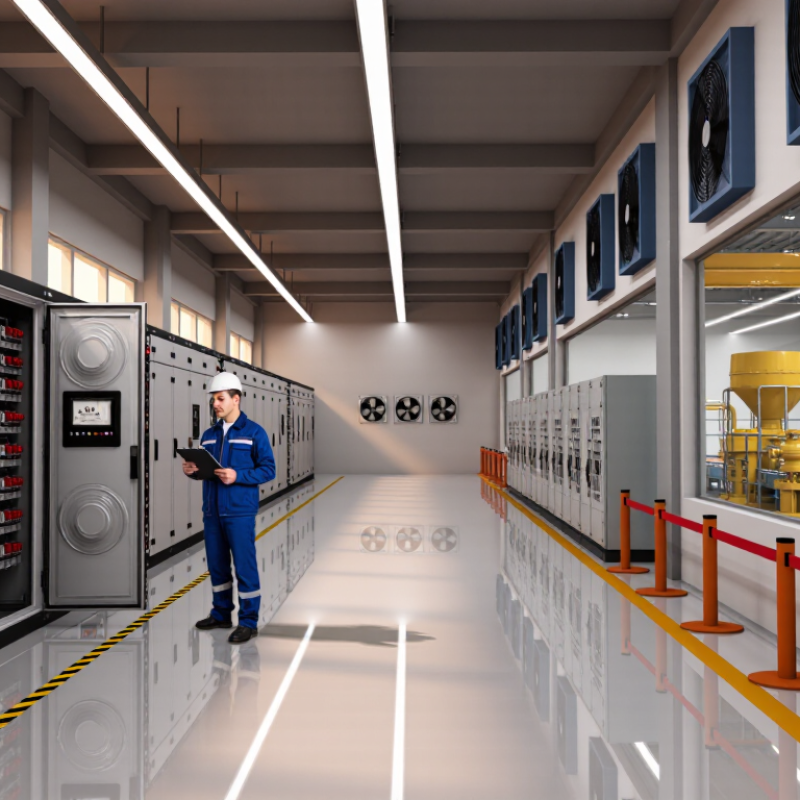
Real projects need careful engineering. Engineers should verify rated voltage, motor current, bypass design, enclosure protection, cooling, harmonic behavior, and fault coordination. Medium-voltage installations demand clear insulation distances, suitable switching equipment, and qualified commissioning personnel. Manufacturers should provide test data, protection settings, manuals, and traceable quality records. Independent inspection can strengthen confidence.
Small details matter.
A poorly selected ramp may overheat the motor. An oversized unit may increase cost without improving control. Site measurements often reveal assumptions that drawings miss. For this reason, buyers should compare lifecycle reliability, service support, spare parts, and application references rather than price alone. The best choice balances electrical safety, mechanical durability, operational continuity, and realistic maintenance capability. Even experienced teams should review the selection when load conditions change.
What Are 380V to 10kV Motor Soft Starters?
Motor soft starters rated from 380V to 10kV are electronic devices for controlled motor acceleration. They manage how three-phase motors receive voltage during startup. Unlike direct-on-line switching, a soft starter uses semiconductor devices, commonly thyristors, to raise voltage gradually. This reduces inrush current and limits mechanical shock on couplings, belts, pumps, and fans. The motor still runs at normal line frequency after acceleration. It is not a variable-frequency drive.
At 380V, soft starters usually fit low-voltage motor control cabinets. At 3.3kV, 6kV, or 10kV, they require stronger insulation, larger clearances, and specialized protection. A typical unit adjusts the thyristor firing angle during the ramp period. A bypass contactor may carry current after acceleration, reducing operating heat. For a large pump, this can help limit pipe hammer. For conveyors, it can reduce belt jerk and material movement. Field commissioning still matters. Technicians should record starting current, ramp time, load behavior, and motor temperature.
Selection requires motor current, starting torque, load inertia, starts per hour, and available fault level. Voltage alone is not enough. A starter chosen only by motor power may perform poorly under heavy loads. Engineers should also check thermal capacity, bypass duty, enclosure conditions, and protection coordination. Medium-voltage systems demand documented isolation and trained maintenance personnel. The phrase “380V to 10kV” describes a voltage range, not one universal model. A neat specification sheet can still hide a difficult load, especially when site data is incomplete.
How Do Soft Starters Manage Motor Current and Torque?
Motor soft starters from 380V to 10kV manage current by controlling the voltage applied to the motor. Thyristors increase voltage gradually during acceleration. This reduces the sharp inrush commonly caused by direct-on-line starting, often five to eight times the motor’s full-load current. Less current means less voltage dip, smaller mechanical shock, and reduced stress on couplings and pumps.
Torque follows a critical rule: motor torque is approximately proportional to voltage squared. If the starter supplies 70% voltage, available starting torque may fall near 49%. That sounds simple, but the load decides everything. A centrifugal pump may accelerate smoothly, while a loaded crusher may stall. Current-limit settings can protect cables and transformers, yet excessive limitation may leave the motor humming without reaching speed.
The International Energy Agency reports that electric motor systems consume roughly half of global electricity. The U.S. Department of Energy has also estimated that motor systems represent about 69% of industrial electricity use in American manufacturing. These figures explain why controlled starting matters, even when starting occurs only briefly. Medium-voltage starters at 3.3kV, 6.6kV, or 10kV use similar principles, but insulation, bypass contactors, and protection require far stricter engineering. Soft starters do not regulate running speed like variable-frequency drives. That distinction is easy to miss. My practical concern is often overlooked: poor ramp settings can reduce electrical stress while creating harmful torque pulsations.
Which Motors and Voltage Levels Can They Support?
Why Choose Motor Soft Starters 380V to 10kV?
Motor soft starters covering 380V to 10kV mainly support three-phase squirrel-cage induction motors. These motors drive pumps, fans, compressors, conveyors, and crushers across industrial sites. Low-voltage systems commonly use 380V, 400V, or 415V supplies. Medium-voltage applications may use 3.3kV, 6.6kV, or 10kV equipment. That distinction matters. A soft starter gradually raises motor voltage, reducing inrush current and mechanical shock during acceleration.
Not every motor qualifies. Most standard induction motors are suitable, provided their rated current, starting torque, and duty cycle match the starter. Some systems can support wound-rotor motors or special motor designs, but compatibility must be confirmed from technical documents. Synchronous motors need careful evaluation and may require different starting arrangements. Soft starters do not change frequency. High-inertia loads may still need a variable frequency drive when controlled acceleration or high starting torque is essential. This is where selection often becomes less tidy.
Site conditions also affect reliable operation. Engineers should check motor insulation, cable length, transformer capacity, short-circuit levels, bypass equipment, and medium-voltage protection. A 10kV motor needs different switching and insulation practices than a 380V motor. Commissioning should record acceleration time, current response, and motor temperature. The first setting is rarely perfect. Reviewing it after several real starts can reveal problems missed during calculation. The safest choice follows the motor nameplate and actual load behavior, not voltage range alone.
What Benefits Do They Provide for Industrial Equipment?
Motor soft starters from 380V to 10kV help industrial equipment start smoothly and safely. They gradually increase motor voltage, reducing inrush current during startup. This can limit voltage dips that disturb nearby control systems and lighting.
The mechanical benefits are equally practical. Pumps experience less water hammer, while conveyors reduce sudden belt tension and gearbox shock. Fans, compressors, and crushers can reach operating speed with less stress on couplings and shafts. In medium-voltage systems, soft starters also support safer coordination with switchgear and motor protection. They do not provide continuous speed control like variable frequency drives. That difference matters. A rushed selection can still cause nuisance trips, especially with heavy loads or frequent starts. Actual motor data and load behavior deserve careful review.
Tips: Check rated voltage, motor power, starting frequency, and acceleration time before choosing a unit. Confirm bypass arrangements, cooling requirements, and protection settings with qualified electrical personnel. Test the complete system under realistic load conditions, not only during no-load commissioning. Keep records of starting current and vibration. These details often reveal problems early. A soft starter may reduce stress, but it cannot correct an undersized cable, poor grounding, or an incorrectly adjusted protection device.
How Should You Select, Install, and Maintain a Soft Starter?
Why Choose Motor Soft Starters 380V to 10kV?
Selecting, installing, and maintaining a soft starter requires more than matching voltage. Check the motor’s rated current, starting torque, load type, and expected starts per hour. Pumps, fans, conveyors, and crushers each need different acceleration settings. A starter for 380V equipment may not suit a 6kV or 10kV motor. Confirm the insulation class, short-circuit rating, enclosure rating, and bypass arrangement. Keep it practical.
A rushed selection often looks economical until the motor overheats. I would also review supply capacity and voltage drop before approval. The starter should match the motor, protection system, and local electrical requirements. During installation, qualified personnel must verify phase order, cable termination, grounding, clearances, and ventilation. Medium-voltage equipment needs controlled access and documented safety procedures. Do not ignore dust or moisture. They shorten service life.
Commissioning should begin with unloaded testing, followed by gradual load checks. Record ramp-up time, current, fault codes, and motor temperature. If acceleration feels unstable, stop and investigate the load or settings. Maintenance teams should inspect terminals, cooling paths, contactors, bypass components, and protection functions on a defined schedule. Thermal scanning can reveal loose connections before failure. Firmware and parameter records should be backed up. Small details matter.
One field lesson deserves attention: a starter can appear healthy while its cooling fan quietly weakens. That detail is easy to miss. Review operating logs after seasonal changes, process modifications, or repeated trips. Settings that worked last year may no longer fit the machine.