7 Best S235 Steel Sheet Pile Suppliers Worldwide
Choosing the right S235 Steel Sheet Pile supplier can shape the safety, cost, and schedule of a construction project. These piles support cofferdams, retaining walls, flood barriers, and temporary excavation systems. Their performance depends on more than a competitive quotation. Steel quality, rolling consistency, profile accuracy, and delivery reliability matter on every site.
This guide introduces seven respected S235 Steel Sheet Pile suppliers worldwide. The selection considers manufacturing experience, production capacity, inspection practices, export performance, and technical support. Experienced buyers usually request mill certificates, chemical composition reports, mechanical test results, and dimensional records before placing an order. They also check pile length, interlock condition, coating requirements, and bundle protection. Small defects can create serious installation delays.
Details matter.
A reliable supplier should explain how its S235 material meets the required specification and project conditions. It should also provide practical guidance for driving equipment, joint alignment, corrosion exposure, and site handling. However, no supplier is perfect for every application. A company with excellent factory capacity may offer weaker local support or slower custom production. This comparison therefore avoids relying on reputation alone. Readers should verify current certifications, production schedules, references, and shipping terms directly with each supplier. Regional availability can change quickly. Prices may also shift with raw material costs and freight conditions. The final decision should balance documented quality, technical communication, and proven delivery performance rather than choosing the lowest offer.
What Is S235 Steel Sheet Pile and Where Is It Used?
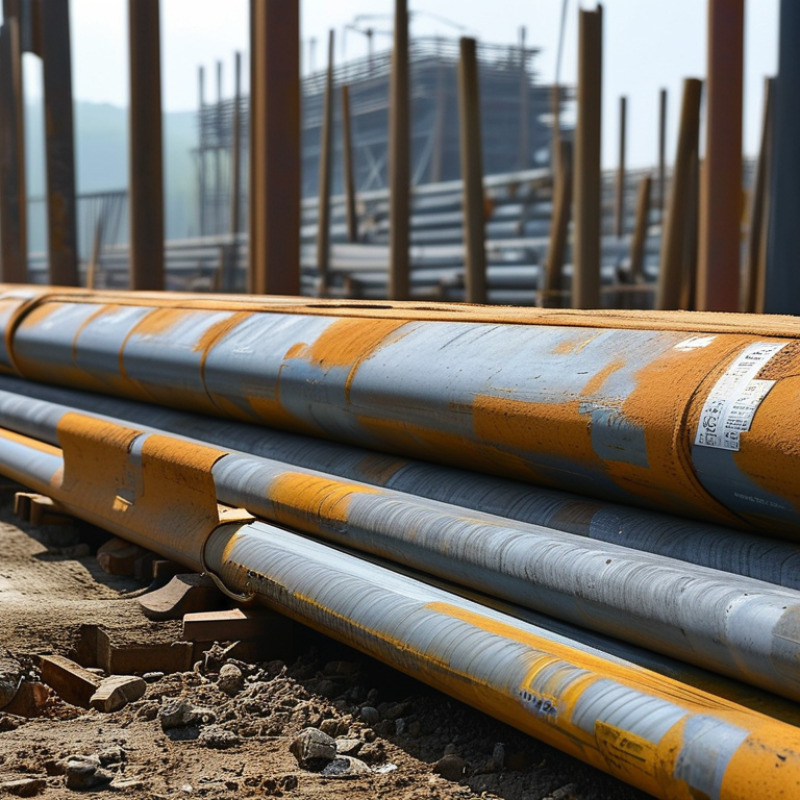
S235 steel sheet pile is a hot-rolled structural steel product commonly specified for earth-retaining and water-control work. Under EN 10025-2, S235 indicates a minimum yield strength of about 235 MPa. The piles usually have interlocking edges and form continuous walls. Their U-shaped or Z-shaped profiles transfer soil and water pressure through bending and embedded resistance.
These piles are used for excavation support, cofferdams, quay walls, flood protection, and temporary construction barriers. On a busy site, a crane lifts each section while a vibratory hammer drives it into the ground. The interlocks reduce soil movement and help limit water seepage. S235 is popular because it offers practical weldability, predictable strength, and reasonable fabrication costs. It is not a universal answer.
Soil conditions must guide the design. Dense gravel, hard layers, buried concrete, and boulders can make installation difficult. Engineers should check bending stress, embedment depth, interlock performance, and groundwater pressure before ordering material. A corrosion allowance may be necessary in seawater or contaminated ground. Paint systems, cathodic protection, or thicker sections can extend service life, but these choices require site-specific review.
In field inspections, damaged interlocks often explain unexpected leakage. Poor alignment can also increase driving resistance and create installation delays. One assumption deserves caution: a stronger-looking pile is not automatically safer. Wall geometry, bracing, drainage, and installation quality often control performance more than steel grade alone. Test driving and monitoring can reveal problems before the full wall is installed.
What Is S235 Steel Sheet Pile and Where Is It Used?
S235 is a non-alloy structural steel grade defined by EN 10025-2. Its minimum yield strength depends on the nominal thickness of the steel. The chart shows the standard minimum yield strength values used when assessing S235 structural components, including sheet piles.
S235 steel sheet piles are commonly used for temporary or permanent retaining walls, cofferdams, excavation support, riverbank protection, quay walls, flood-defense structures, and foundation works. Actual sheet-pile capacity also depends on the profile geometry, section modulus, wall arrangement, soil conditions, corrosion allowance, and installation method.
Key Standards for Evaluating Global S235 Sheet Pile Suppliers
7 Best S235 Steel Sheet Pile Suppliers Worldwide
When evaluating global S235 sheet pile suppliers, begin with technical compliance, not sales claims. Confirm whether the piles are hot rolled or cold formed. EN 10248 and EN 10249 apply to different manufacturing routes. The material certificate should identify the S235 grade, heat number, chemical composition, and mechanical results. Documents matter.
Inspect dimensional accuracy closely. Check width, thickness, length tolerance, interlock performance, and straightness against the agreed specification. A sample section should fit smoothly without excessive force. Ask for evidence. Independent testing can verify tensile strength, yield strength, impact performance, and coating thickness when corrosion protection is required. Photos alone are weak proof.
Reliable suppliers show traceability from production to shipment. Their packing lists should match heat numbers and bundle markings. Review factory capacity, monthly output, inspection equipment, export experience, and delivery records for similar foundation projects. References from ports, retaining walls, or temporary excavation works can reveal practical performance. Pricing deserves attention, but unusually low offers may hide thinner sections, incomplete testing, or inconsistent lengths. I have found that document quality often predicts site reliability, although it is not perfect. Even experienced buyers can overlook storage damage or interlock deformation during a rushed inspection. A supplier should accept a clear inspection plan, provide corrective records, and explain what happens when measured results fall outside tolerance. Being transparent about limitations is often more credible than promising flawless production.
Seven Leading S235 Steel Sheet Pile Suppliers Worldwide
Seven leading S235 steel sheet pile suppliers worldwide are usually evaluated by production control, stock depth, and documentation quality. A European mill may offer reliable EN 10025-2 compliance and consistent rolling tolerances. A Turkish exporter can provide competitive pricing, flexible production, and practical port access. A Chinese manufacturer often supports large-volume orders, custom lengths, and several surface treatments. A Korean producer may stand out for precise dimensions and disciplined quality inspection. A Japanese distributor can be useful when traceability and detailed technical communication matter. A Middle Eastern stockist may reduce delivery time for regional infrastructure projects. A North American importer can support local warehousing and responsive replacement planning.
Experience shows that a supplier’s certificate is only the starting point. Buyers should request mill test certificates, heat numbers, section drawings, and recent inspection records. Check yield strength, tensile strength, elongation, and interlock fit before approving shipment. Small differences in pile length can complicate driving work. Ask about coating thickness, straightness, packing, and lifting points. Delivery promises also deserve careful review.
No shortlist is flawless. Some suppliers communicate well but hold limited stock. Others offer low prices while adding freight or inspection costs later. I would compare at least three quotations against identical specifications. An independent inspection can reveal problems before loading. This step feels slow, but site delays cost more. The best choice depends on soil conditions, driving equipment, project location, and required installation speed. Supplier performance should be judged through evidence, not polished sales language.
Supplier Comparison: Quality, Capacity, Pricing, and Delivery
7 Best S235 Steel Sheet Pile Suppliers Worldwide
Comparing seven S235 steel sheet pile suppliers requires more than checking online prices. In practice, I examine mill certificates, heat numbers, chemical composition, yield strength, and dimensional tolerances. The steel should match the stated S235 grade. It should also arrive with traceable inspection records. Small errors matter. A slightly distorted interlock can slow installation and increase handling costs.
Production capacity separates a dependable supplier from a seasonal trader. Ask about monthly output, rolling schedules, available profiles, and minimum order quantities. A large facility may handle urgent infrastructure orders, but capacity alone proves little. I prefer suppliers who explain quality-control stages clearly. Factory photos are not enough. Independent inspection can reveal surface cracking, uneven coatings, or inconsistent pile lengths before shipment.
Pricing should include cutting, testing, packing, inland transport, freight, and possible port charges. A low quotation may hide expensive extras. Delivery comparisons should review lead time, production slots, loading methods, and previous export experience. Request a realistic shipping plan, not only an estimated dispatch date. I have seen schedules change after payment because stock was assumed rather than confirmed. That weakness deserves careful questioning. Supplier reliability often appears in small details: prompt technical replies, accurate drawings, and honest notices when production slips.
7 Best S235 Steel Sheet Pile Suppliers Worldwide - Supplier Comparison: Quality, Capacity, Pricing, and Delivery
| Supplier Profile | Primary Supply Region | Applicable Standard | Typical Profile Type | Typical Thickness | Indicative Monthly Capacity | Indicative Price
(USD/metric ton) | Typical Production Lead Time | Typical Export Delivery | Quality Documentation | Best Fit |
| Profile 1 | East Asia | EN 10025-2; S235JR | U-type and Z-type hot-rolled sheet piles | 8–22 mm | 8,000–20,000 t | 680–880 | 25–45 days | 35–60 days | Mill test certificate, dimensional report, chemical and mechanical test results | Large-volume projects and price-sensitive tenders |
| Profile 2 | South Asia | EN 10025-2; S235JR | U-type sheet piles with standard interlocks | 8–20 mm | 4,000–12,000 t | 700–930 | 30–50 days | 40–70 days | EN 10204 3.1 certificate, inspection report, packing list | Regional infrastructure and temporary retaining walls |
| Profile 3 | Western Europe | EN 10025-2; S235JR | Z-type and U-type sections with tight dimensional control | 8–25 mm | 5,000–15,000 t | 950–1,350 | 20–40 days | 25–50 days | EN 10204 3.1/3.2 options, CE-related documentation where applicable | Marine works, public procurement, and specification-driven projects |
| Profile 4 | North America | ASTM/AASHTO project requirements with S235JR equivalency review | U-type sheet piles and fabricated corner sections | 9–25 mm | 3,000–10,000 t | 1,050–1,500 | 25–55 days | 30–65 days | Material traceability, third-party inspection, weld and coating records when required | Fast domestic replenishment and engineered applications |
| Profile 5 | Middle East | EN 10025-2; S235JR | U-type sheet piles for foundation and marine construction | 8–22 mm | 2,500–8,000 t | 760–1,050 | 30–50 days | 35–65 days | Mill certificate, loading supervision, dimensional and visual inspection | Port construction, cofferdams, and foundation support |
| Profile 6 | Southeast Asia | EN 10025-2; S235JR | U-type and Z-type sections; standard cut lengths | 8–20 mm | 3,000–10,000 t | 690–900 | 25–45 days | 30–55 days | EN 10204 3.1 certificate, packing and marking records | Short-to-medium-term construction programs and nearby markets |
| Profile 7 | Latin America | EN 10025-2; S235JR, subject to project approval | U-type sheet piles and limited Z-type availability | 8–22 mm | 2,000–7,000 t | 820–1,150 | 35–60 days | 45–80 days | Mill certificate, origin documentation, inspection and customs documents | Local or regional supply where ocean freight is a major cost factor |
Benchmark note: S235JR is a non-alloy structural steel grade specified under EN 10025-2, with a minimum yield strength of 235 MPa for nominal thicknesses up to 16 mm. Price, capacity, lead time, and freight figures are indicative planning ranges for standard S235 sheet piles and should be confirmed by written quotations, production schedules, inspection requirements, Incoterms, and destination-port freight rates.
How to Select the Right S235 Sheet Pile Supplier for Your Project
Choosing among the seven best S235 steel sheet pile suppliers worldwide requires more than comparing prices. Project experience matters. A reliable supplier should understand excavation depth, soil pressure, water conditions, and installation equipment. Ask for verified data on section modulus, steel grade, dimensions, interlock performance, and allowable tolerances. S235 must match the specified standard, not merely a similar label.
Request recent mill certificates, preferably EN 10204 3.1 documents, with chemical and mechanical results. Check whether the supplier can provide production samples, inspection records, and traceable batch numbers. Independent inspection can confirm thickness and straightness before shipment. It adds cost. It can prevent expensive site delays. Suppliers with practical engineering support may also recommend suitable pile lengths, corner details, and driving methods.
Logistics deserve equal attention. Confirm manufacturing capacity, realistic lead times, export packaging, port arrangements, and replacement procedures for damaged piles. A supplier may offer a low quotation but provide vague delivery dates. That is a warning. Review comparable project references, communication speed, and payment documentation. Online claims are not enough. I have seen technically correct piles arrive late because transport planning was ignored. That mistake is easy to repeat. Local soil reports, lifting limits, and installation records should guide the final decision. A careful supplier will ask difficult questions before issuing a quotation, even when those questions slow the sale.