Top 10 High Stability Resistor Types for Global Buyers?
Choosing the right High Stability Resistor can determine whether equipment remains accurate after years of service. Global buyers often evaluate resistance drift, temperature coefficient, voltage coefficient, noise, and long-term reliability. These details matter in medical instruments, industrial controls, laboratory equipment, aerospace electronics, and precision measurement systems.
This guide examines ten resistor types known for stable performance, including metal foil, wirewound, metal film, thin film, thick film, and specialized network designs. Each type offers different strengths. Metal foil resistors provide exceptional temperature stability, while precision wirewound parts can deliver strong accuracy and low long-term drift. Thin film networks may save board space, but their performance depends heavily on substrate quality and environmental protection.
Real purchasing decisions require more than attractive specifications. Buyers should compare tolerance at delivery, resistance drift after testing, operating temperature range, power derating, humidity resistance, and available certifications. A supplier’s traceability records and reliability data also deserve close inspection. Datasheets can look impressive.
However, no resistor type is perfect for every application. A component with excellent room-temperature accuracy may respond poorly to vibration, moisture, or repeated thermal cycling. Some published figures reflect controlled laboratory conditions, not crowded production lines or outdoor cabinets. That difference is easy to overlook. Therefore, this overview combines technical evidence with practical selection concerns, helping engineers and procurement teams make more defensible choices across international supply chains. Supplier consistency matters. Even a strong design can fail when production batches vary.
What Defines High Stability in Resistors?
High stability means resistance changes very little during temperature swings, electrical stress, humidity exposure, and long service periods. It is not simply a tight initial tolerance. A resistor marked 0.1% may still drift noticeably after repeated heating.
The key measurements include temperature coefficient, long-term load drift, voltage coefficient, and humidity resistance. Temperature coefficient is usually expressed in ppm/°C. For precision circuits, buyers often seek values below 25 ppm/°C, while premium applications may require 5 ppm/°C or less.
Testing conditions matter greatly. IEC 60115-1 describes endurance testing commonly performed over 1,000 hours at rated conditions. A stable component should show only a small resistance change after this exposure. AEC-Q200 qualification also uses extended operational-life and environmental tests for automotive components.
These figures help compare metal foil, precision thin-film, wirewound, and metal oxide designs. However, published data can hide important details.
A resistor may achieve excellent stability at 25°C, then drift under high humidity or pulse loading. NASA EEE-INST-002 guidance stresses electrical derating because lower operating stress can improve reliability.
Keep working voltage below the maximum rating.
Leave thermal margin.
In practical designs, operating a resistor at 50% of its power rating is often safer than using its full capacity. That rule is not universal. Package size, solder temperature, mechanical strain, and board layout can change results.
A careful buyer should request test duration, ambient conditions, drift limits, and failure criteria before comparing suppliers.
Key Performance Factors for Global Resistor Selection
Top 10 High Stability Resistor Types for Global Buyers
Selecting a stable resistor starts with the application, not the catalog title. Metal film, thin film, thick film, wirewound, foil, MELF, shunt, power, high-voltage, and resistor-network designs each serve different conditions. Thin-film and foil types often provide low temperature coefficients and tight tolerance. Wirewound parts handle heat well, but their inductance may affect fast signals. Thick-film options are practical for general circuits, though humidity and long-term drift deserve closer review.
Temperature coefficient is a critical comparison point. A resistor rated at 25°C may behave differently inside a hot enclosure. Check the operating range, derating curve, rated voltage, pulse capability, and load-life data. For measurement circuits, a 0.1% tolerance may still be inadequate if the temperature coefficient is high. In power designs, physical size and thermal path matter as much as resistance value. Small packages can become surprisingly hot.
Global buyers should request independent test reports, traceable quality records, and compliance documentation for the destination market. Verify packaging, moisture protection, lead times, and lot consistency before approving production. A supplier’s average specification is not enough. Ask how resistance drift was measured and over what duration. I have seen designs pass room-temperature testing and fail after repeated thermal cycling. That mistake is easy to make. Selection should include real operating humidity, vibration, cleaning processes, and expected service life, even when the first prototype appears stable.
Ten High-Stability Resistor Types and Their Core Features
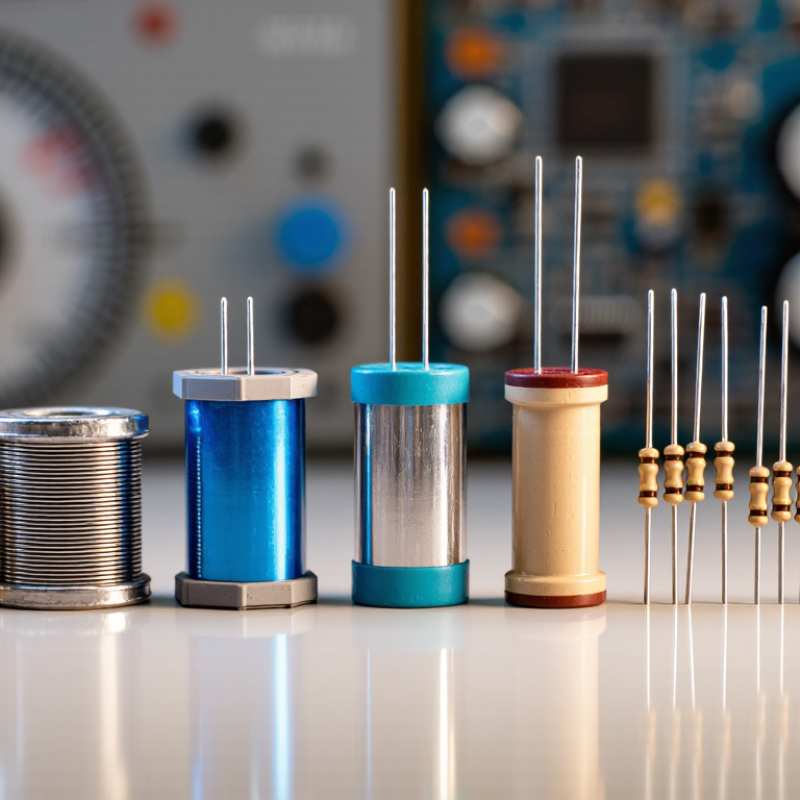
Global buyers can choose from ten resistor types when long-term accuracy matters. Precision metal-film resistors offer low temperature drift and reliable tolerance. Thin-film resistors provide accurate values for measurement circuits. Metal-foil resistors deliver exceptional stability, low noise, and very small temperature coefficients. Wirewound resistors handle higher power and remain dependable under thermal stress.
Metal-oxide-film resistors resist moisture and elevated temperatures better than many standard films. MELF resistors provide strong mechanical reliability and consistent electrical performance. Precision thick-film resistors balance cost, size, and acceptable stability. Chip resistor arrays save board space while matching several resistance values. Metal-element current-sense resistors support accurate current monitoring with low resistance. Hermetically sealed precision resistors protect sensitive elements from humidity and contamination. They cost more, though.
Tips: Check tolerance, temperature coefficient, power rating, voltage rating, and drift data together. Ask for test conditions, not only headline specifications. Verify aging results at the actual operating temperature. A resistor rated for high stability can still drift after repeated thermal cycling. Keep lead length and mounting stress controlled during evaluation.
In practical sourcing, foil and thin-film types suit precision instruments. Wirewound designs fit power circuits, but inductance may affect fast signals. Thick-film arrays work well where space and budget are limited. The best choice depends on the circuit, not the most impressive specification. I have found that supplier documentation can be incomplete, so independent sampling remains worthwhile. Stability is never just a catalog number.
Top 10 High-Stability Resistor Types for Global Buyers
Representative temperature coefficient of resistance (TCR) values. Lower values generally indicate better resistance stability across temperature changes.
Ultra-low TCR, excellent long-term stability, and strong resistance to thermal EMF.
Very low TCR and high accuracy; inductance should be considered in high-frequency circuits.
Stable copper-manganese alloy element with low thermal drift and good measurement performance.
Good precision, low noise, and low TCR in instrumentation and sensor circuits.
Designed for low-ohmic current sensing with strong pulse and power capability.
Balanced accuracy, low noise, and dependable environmental stability for general precision use.
Good overload, moisture, and temperature endurance with moderate precision.
Compact and cost-effective, with stability depending on substrate and trimming quality.
Economical construction with moderate stability for less demanding applications.
High pulse tolerance but comparatively higher drift, noise, and temperature sensitivity.
Values are representative engineering figures in ppm/°C and can vary with resistance value, package size, operating power, environmental exposure, and production grade. Always verify the manufacturer’s datasheet for qualification decisions.
Applications, Environmental Limits, and Reliability Considerations
Top 10 High Stability Resistor Types for Global Buyers
Applications, Environmental Limits, and Reliability Considerations
High stability resistors support precision instruments, medical equipment, automation controls, and communication systems. Common choices include metal foil, thin film, thick film, wirewound, metal oxide, carbon film, ceramic, fusible, current-sense, and high-voltage resistors. Each type behaves differently under heat, humidity, vibration, and electrical stress. Metal foil offers excellent temperature stability, while wirewound designs handle higher power. Thin film suits accurate measurement circuits. High-voltage and ceramic types need careful spacing and insulation.
Environmental limits often decide reliability more than the resistance value. Check the rated temperature range, humidity exposure, altitude, pulse load, and storage conditions. A resistor used near a motor may face vibration and short overloads. A circuit installed outdoors may require conformal protection or a sealed assembly. Derating power is essential. Running a component at its maximum rating can shorten its useful life, even when laboratory tests look acceptable. This is where many purchasing decisions become too optimistic.
Tips: Request tolerance, temperature coefficient, voltage coefficient, load-life, and failure-rate data. Confirm test standards and production traceability. Compare real operating conditions, not only catalogue figures. Samples should face thermal cycling and humidity testing before volume orders. I have seen stable parts fail because the surrounding board trapped heat. That detail is easy to miss. Also, supplier documents may not reflect every installation environment, so field feedback still matters.
The figures below are typical industry ranges for commercially available precision components. Actual limits depend on construction, resistance value, power derating, package size, qualification level, and manufacturer specifications.
| Rank | Resistor Type | Typical Tolerance | Typical TCR | Typical Long-Term Stability | Typical Operating Temperature | Common Applications | Key Environmental Limits | Reliability Considerations |
|---|---|---|---|---|---|---|---|---|
| 1 | Bulk Metal Foil Resistor | ±0.01% to ±1% | Approximately ±0.05 to ±2 ppm/°C | Typically below 0.01% after extended rated operation | Approximately −65°C to +175°C | Precision references, instrumentation amplifiers, metrology, medical equipment, aerospace electronics | Performance is affected by self-heating, soldering stress, humidity, and rapid temperature changes. Power rating must be derated at elevated temperature. | Excellent resistance stability and low noise. Avoid excessive pulse energy, mechanical strain, and prolonged operation near the maximum temperature or power rating. |
| 2 | Precision Thin-Film Resistor | ±0.05% to ±1% | Approximately ±5 to ±25 ppm/°C | Typically ±0.05% to ±0.2% over rated life | Approximately −55°C to +155°C | Data converters, industrial controls, test equipment, sensor signal conditioning, feedback networks | Moisture, sulfur-containing atmospheres, contamination, and overloads can change the resistive film. Follow voltage and power derating curves. | Low excess noise and good temperature tracking. Protective coatings and qualified assembly processes improve humidity and contamination resistance. |
| 3 | Thin-Film Resistor Network | ±0.05% to ±0.5% for ratio matching | Approximately ±5 to ±15 ppm/°C for tracking | Typically better than ±0.1% for ratio drift over rated life | Approximately −55°C to +125°C or +155°C | Precision dividers, differential amplifiers, analog-to-digital converters, medical and measurement circuits | Network temperature gradients, board flexure, humidity, and unequal self-heating can reduce ratio accuracy. | Matched elements provide superior tracking compared with separate resistors. Use symmetrical PCB layouts and limit thermal gradients. |
| 4 | Precision Wirewound Resistor | ±0.01% to ±1% | Approximately ±2 to ±20 ppm/°C | Typically ±0.01% to ±0.1% over rated life | Approximately −55°C to +275°C, depending on construction | Laboratory instruments, power supplies, precision amplifiers, load banks, reference circuits | Parasitic inductance and capacitance may affect high-frequency circuits. Vibration, shock, humidity, and overload pulses require application review. | Very stable under continuous power and high-temperature operation. Non-inductive winding styles are preferred for fast or high-frequency signals. |
| 5 | Hermetically Sealed Precision Resistor | ±0.01% to ±1% | Approximately ±2 to ±25 ppm/°C | Typically below ±0.1% over qualified life | Approximately −65°C to +200°C | Avionics, defense electronics, harsh industrial controls, downhole and high-reliability instrumentation | Sealing limits moisture ingress, but temperature cycling, pressure changes, vibration, and lead attachment stress remain important. | Strong environmental protection and predictable aging. Verify hermeticity, burn-in, screening, and qualification requirements for critical systems. |
| 6 | Metal Oxide Film Resistor | ±0.5% to ±5% | Approximately ±50 to ±300 ppm/°C | Typically within ±0.5% to ±2% over rated life | Approximately −55°C to +235°C | Power supplies, industrial equipment, protection circuits, general-purpose high-temperature electronics | Resistance can shift after severe overloads, high humidity exposure, or operation close to the maximum film temperature. | Better surge capability and temperature endurance than many general-purpose film types. Maintain adequate pulse and power margin. |
| 7 | Precision Metal Film Resistor | ±0.1% to ±1% | Approximately ±15 to ±100 ppm/°C | Typically ±0.1% to ±0.5% over rated life | Approximately −55°C to +155°C | Industrial automation, audio equipment, control loops, instrumentation, communications hardware | High humidity, corrosive gases, excessive voltage, and repeated thermal cycling can accelerate drift. | Good balance of cost, noise, availability, and stability. Select protective coating and pulse-rated construction where necessary. |
| 8 | Metal Element Current-Sense Resistor | ±0.1% to ±1% | Approximately ±15 to ±100 ppm/°C | Typically ±0.1% to ±1% over rated life | Approximately −55°C to +170°C | Battery management, motor drives, power conversion, overcurrent protection, energy measurement | High current creates significant self-heating. Thermal gradients, PCB copper layout, pulse duration, and overload energy affect accuracy and life. | Use Kelvin connections for low-value parts, adequate copper area, and power derating. Check solder-joint reliability under thermal cycling. |
| 9 | Precision Thick-Film Resistor Network | ±0.1% to ±1% for precision versions | Approximately ±25 to ±100 ppm/°C | Typically ±0.1% to ±0.5% over rated life | Approximately −55°C to +125°C | Digital termination, pull-up and pull-down arrays, interface circuits, compact industrial electronics | Moisture, board flexure, sulfur exposure, and localized heating can affect resistance and ratio matching. | Provides high density and consistent matching in a small footprint. Select automotive or harsh-environment qualifications when required. |
| 10 | Cermet Trimming Resistor | ±10% initial; adjusted circuits may achieve much tighter system accuracy | Approximately ±50 to ±250 ppm/°C | Typically ±1% to ±5% after adjustment and rated-life testing | Approximately −55°C to +125°C or +150°C | Calibration, sensor offset adjustment, power-supply feedback, industrial measurement equipment | Mechanical adjustment, vibration, humidity, contamination, wiper current, and repeated adjustment can influence stability. | Use sealed or high-reliability versions for long service life. Avoid placing the wiper at the electrical extremes and limit adjustment current. |
How Global Buyers Compare and Specify Resistor Types
Global buyers compare resistor types by stability, not by resistance value alone. A 2024 MarketsandMarkets analysis forecasts roughly 5% annual growth in the resistor market, driven by automotive, industrial, and communication equipment. These sectors demand predictable performance under heat, vibration, and continuous electrical load.
Metal foil resistors usually provide the lowest temperature coefficient, often below 1 ppm/°C, but their cost and availability can limit volume purchasing. Thin-film resistors commonly offer tight tolerance, low noise, and TCR values near 25 ppm/°C. Wirewound types handle power well, although their inductance can affect high-frequency circuits. Thick-film parts are economical, yet their long-term drift may be higher. Buyers should compare the complete specification, not only the datasheet headline.
IEC 60115-1 defines core resistor requirements, including resistance tolerance, climatic testing, and endurance evaluation. For each quotation, specify resistance, tolerance, rated power, operating temperature, TCR, load-life drift, humidity resistance, and pulse capability. A 0.1% resistor may still fail the application if its temperature rise is excessive. Check test conditions carefully. A spreadsheet can mislead when one supplier reports drift after 1,000 hours and another reports it after 2,000 hours. The better comparison uses identical test temperatures, power ratios, package sizes, and acceptance limits. Procurement teams should also request production traceability and sample verification before approving a global source.