Top 10 Electrical Parking Lift Manufacturers Worldwide?
Choosing the right Electrical Parking Lift requires more than comparing glossy brochures or advertised lifting capacity. A reliable evaluation must examine engineering quality, operating safety, installation experience, service networks, and real project performance. Platform dimensions, maximum vehicle weight, lifting speed, emergency controls, drainage, corrosion protection, and maintenance access can determine whether a system performs smoothly in a crowded urban garage.
Parking researcher Donald Shoup famously said, “Parking requirements act like a fertility drug for cars.” His observation remains relevant because parking infrastructure influences traffic, land use, construction costs, and city design. An Electrical Parking Lift can use vertical space more efficiently, but it is not a universal solution. Building structure, user habits, climate, vehicle sizes, and local safety requirements still matter.
This guide reviews ten leading Electrical Parking Lift manufacturers worldwide through a practical, evidence-based lens. The comparison considers product engineering, automation, safety documentation, customization, installation records, warranty support, and long-term maintenance. It also recognizes an uncomfortable limitation: public information is often incomplete, and manufacturers naturally present their strongest projects. A brochure is not evidence.
Real experience matters. A lift that operates quietly in a showroom may behave differently after years of dust, winter moisture, repeated loading, or rushed servicing. Buyers should verify reference sites, inspect control systems, and ask who responds when equipment stops at midnight. The strongest manufacturers are not always the largest. Sometimes, regional support matters more than a famous name. That deserves careful reflection.
Definition and Working Principles of Electrical Parking Lifts
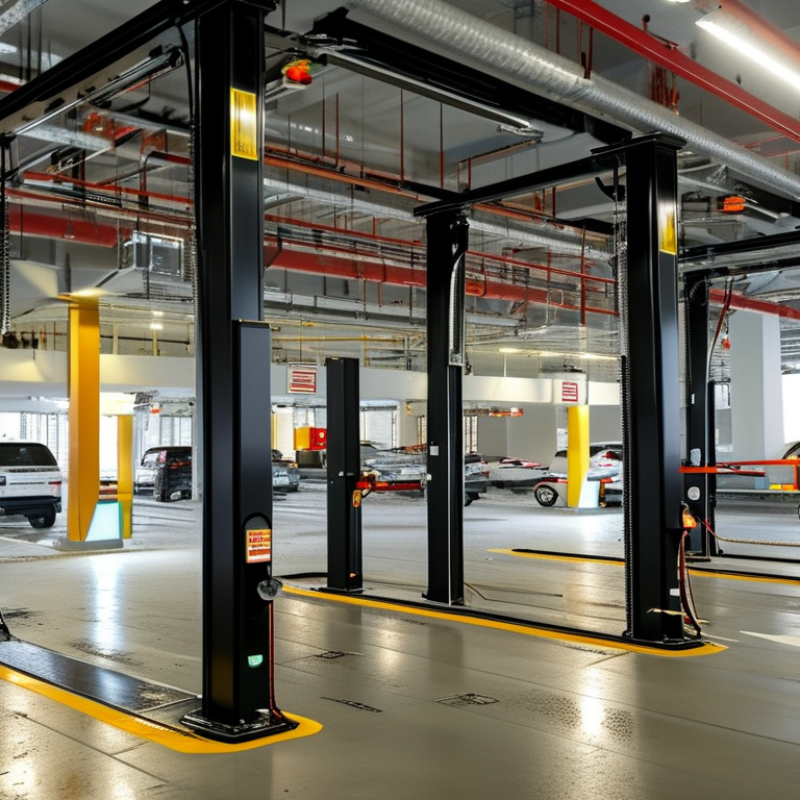
An electrical parking lift is a powered platform that moves vehicles vertically or horizontally. It expands parking capacity without requiring a larger footprint. Unlike conventional ramps, the system uses motors, gear drives, hydraulic assistance, or screw mechanisms. Sensors monitor platform position, vehicle presence, and door clearance. A controller then coordinates each movement.
The operating cycle is straightforward. A driver parks on the platform and activates the control panel. The motor transfers torque through a lifting mechanism. Guide rails keep the platform balanced during travel. Limit switches stop movement at programmed levels. Mechanical locks support the platform before vehicle access begins. Emergency-stop buttons and obstruction sensors add another safety layer. Small details matter here.
The International Energy Agency reported over 14 million electric cars sold globally in 2023. This growth increases demand for parking lifts with charging access, cable protection, and ventilation planning. The United Nations projects that 68% of people will live in urban areas by 2050. Space-efficient parking will therefore become more relevant in dense districts.
However, electrical lifting is not automatically efficient. Poor load balancing can increase energy use and vibration. In field inspections, drainage, corrosion protection, and maintenance access are often underestimated. A reliable design needs rated capacity, backup lowering, anti-fall locks, and documented testing. Operators should also verify clearance around mirrors, charging cables, and vehicle roofs. Some systems appear simple, but their failure points are not.
Top 10 Electrical Parking Lift Configurations Worldwide
This chart compares representative rated capacities for ten common electrical parking-lift configurations. Electrical parking lifts use motors, gear drives, hydraulic-assisted systems, or screw mechanisms to raise and position vehicles on platforms, while safety locks and limit switches prevent unintended movement.
The capacity values are representative engineering specifications commonly used for passenger-vehicle parking systems. Actual capacity, lifting height, speed, and platform dimensions vary according to local regulations, vehicle classes, and site conditions.
Key Features for Comparing Global Parking Lift Manufacturers
Comparing the top 10 electrical parking lift manufacturers requires more than checking lifting capacity. Start with tested performance. Ask for rated load, platform dimensions, lifting speed, duty cycle, and lowering time. A lift carrying 2,000 kilograms should show independent test records, not only laboratory claims. EN 14010 and relevant machinery safety requirements offer useful reference points, although compliance documents can vary by market.
Electrical efficiency also matters. The IEA reported nearly 14 million electric car sales worldwide in 2023, representing about 18% of global car sales. This growth makes charging compatibility, cable protection, and electrical load management practical comparison points. Examine motor efficiency, standby consumption, emergency lowering, and protection against overload or phase failure. A parking lift should operate quietly in a residential garage, not merely perform well in a factory demonstration.
Safety controls reveal engineering maturity. Look for interlocked gates, anti-fall devices, obstruction sensors, manual recovery procedures, and clearly documented maintenance intervals. The ISO 13849 framework can help buyers assess safety-related control systems. Corrosion protection deserves attention in coastal cities. Request coating thickness, salt-spray results, and replacement-part availability. Software support is important too, but vendors sometimes promise remote monitoring without explaining data ownership or cybersecurity safeguards. That deserves careful questioning. No scorecard is perfect. Installation quality, operator training, and local service response can change real performance more than a polished specification sheet. Evaluate those details through site references, warranty terms, and an observed full-load test.
Top 10 Electrical Parking Lift Manufacturers Worldwide
The global market for electrical parking lifts is expanding with urban density and electric vehicle adoption. The IEA’s Global EV Outlook 2025 reports that more than 17 million electric cars were sold worldwide in 2024. This growth increases demand for compact, power-efficient parking equipment.
Market estimates vary. Grand View Research projects strong growth for automated parking systems through 2030, while other industry reports show different market sizes and forecasts. That difference matters. Buyers should assess actual lift capacity, duty cycles, installation conditions, and service coverage instead of trusting rankings alone. The top 10 manufacturers should demonstrate stable platforms, emergency lowering systems, anti-drop protection, and clear maintenance records. Electrical consumption also deserves attention. A lift operating hundreds of cycles daily may create higher costs than its brochure suggests.
Tips: Request factory test records, load-test certificates, spare-parts timelines, and local technician support. Check whether the system fits SUVs, battery vehicles, and narrow basement spaces. Ask for noise readings, too. Small details often expose weak engineering. Even experienced buyers can overlook drainage, ventilation, or winter temperature effects. That is an uncomfortable but useful reminder. A polished interface cannot compensate for poor site planning. Independent inspection before commissioning remains valuable, especially when comparing suppliers across different regions.
| Rank | Anonymous Manufacturer | Primary Market Region | Common Lift Configuration | Typical Rated Load | Typical Platform Length | Typical Lifting Height | Drive System | Common Safety Features | Applicable Standards |
|---|---|---|---|---|---|---|---|---|---|
| 1 | Manufacturer A | East Asia and Southeast Asia | Two-post and four-post parking lift | 2,000–3,500 kg | 4,800–5,500 mm | 1,500–2,000 mm | Electro-hydraulic power unit | Locking ladders, limit switches, emergency stop | CE-related machinery requirements; local electrical codes |
| 2 | Manufacturer B | Western Europe and the Middle East | Four-post independent parking lift | 2,700–4,000 kg | 5,000–5,700 mm | 1,600–2,100 mm | Electro-hydraulic synchronized lifting | Mechanical locks, anti-drop valves, overload protection | EN 1493 and applicable European machinery requirements |
| 3 | Manufacturer C | North America | Four-post storage and service lift | 2,700–3,600 kg | 5,000–5,600 mm | 1,700–2,000 mm | Hydraulic cylinder with electric motor | Automatic safety locks, cable slack detection, wheel stops | Applicable ANSI/ALI lift safety requirements |
| 4 | Manufacturer D | Central and Northern Europe | Scissor-type parking platform | 2,000–2,600 kg | 4,700–5,400 mm | 1,500–1,900 mm | Electro-hydraulic scissor mechanism | Platform anti-tilt system, safety edges, emergency lowering | EN 1493; national installation and electrical regulations |
| 5 | Manufacturer E | East Asia and Oceania | Puzzle parking and automated parking module | 2,000–2,500 kg per space | 4,800–5,300 mm | Variable by system layout | Electric motor, chain, screw, or hydraulic drive | Photocells, interlocks, obstacle detection, access control | Applicable automated parking and machinery safety standards |
| 6 | Manufacturer F | Southern Europe and Latin America | Dependent two-level parking lift | 2,000–2,700 kg | 4,800–5,400 mm | 1,600–1,900 mm | Electro-hydraulic twin-cylinder system | Mechanical locking positions, overload valve, upper limit switch | CE-related requirements and local building regulations |
| 7 | Manufacturer G | North Asia and Central Asia | Stacker parking lift for passenger vehicles | 2,000–2,500 kg | 4,800–5,200 mm | 1,500–1,800 mm | Electric screw or hydraulic drive | Door interlocks, emergency stop, anti-fall devices | National machinery, electrical, and fire-safety requirements |
| 8 | Manufacturer H | Western Europe and the United Kingdom | Underground or pit parking lift | 2,000–3,000 kg | 4,900–5,500 mm | 1,700–2,200 mm | Hydraulic power pack with electric motor | Pit protection, drainage control, locking system, emergency descent | EN 1493 and local construction requirements |
| 9 | Manufacturer I | South Asia and the Gulf region | Heavy-duty four-post parking platform | 3,000–4,000 kg | 5,000–5,800 mm | 1,600–2,000 mm | Electro-hydraulic synchronized system | Load-holding valves, mechanical locks, wheel chocks | Applicable national lifting-equipment and electrical standards |
| 10 | Manufacturer J | Australia and New Zealand | Residential and commercial two-level parking lift | 2,000–2,700 kg | 4,800–5,400 mm | 1,500–1,900 mm | Electric hydraulic power unit | Safety locks, platform restraints, overload sensor, emergency stop | Applicable regional lifting, electrical, and building standards |
Note: The manufacturer identifiers are anonymized as requested. Rankings are an editorial comparison based on international market coverage, product availability, engineering scope, and typical electrical parking-lift configurations. Actual specifications, certifications, load ratings, and installation requirements should be confirmed directly from the applicable technical documentation.
Safety Standards and Technologies Used in Electrical Parking Lifts
Top 10 Electrical Parking Lift Manufacturers Worldwide: Safety Standards and Technologies Used in Electrical Parking Lifts
When comparing the top ten electrical parking lift manufacturers worldwide, safety should guide every decision. Reliable manufacturers design equipment around risk assessment, load testing, and documented maintenance procedures. Common references include ISO 12100 for machinery risk reduction and EN 60204-1 for electrical equipment safety. Regional requirements may also involve CE, UL, or CSA certification, depending on the installation location.
A dependable parking lift usually includes mechanical anti-fall locks, overload protection, upper and lower limit switches, and emergency-stop buttons. Photoelectric sensors can detect vehicles, people, or misplaced objects near moving platforms. Door interlocks prevent operation when access gates remain open. Many modern systems use PLC controls, fault displays, and password-protected settings. Battery-supported lowering can be valuable during a power failure, but its capacity must match the platform load and travel distance.
Installation quality matters as much as factory design. Technicians should verify anchor bolts, platform leveling, cable routing, grounding, and emergency controls during commissioning. Small details matter. Operators also need practical training, not just a signed attendance sheet. No sensor is perfect, especially in dusty garages or poor lighting. Regular inspections should test locks, brakes, sensors, hydraulic or screw-drive components, and warning alarms. A polished specification sheet may hide weak after-sales support. Buyers should request inspection records, spare-parts access, response times, and clear load ratings before approving any electrical parking lift.
How to Select the Right Electrical Parking Lift Manufacturer
Choosing the right electrical parking lift manufacturer requires more than comparing prices. The lift must match your vehicle sizes, ceiling height, floor strength, and daily traffic. Ask for detailed load charts, platform dimensions, motor specifications, and emergency lowering procedures. A reliable manufacturer should explain these points clearly, without hiding behind general claims.
Check how each manufacturer tests its equipment. Request evidence of factory inspections, electrical protection, structural fatigue testing, and compliance with applicable safety standards. Installation quality matters equally. Ask whether trained technicians supervise commissioning and provide practical operator training. Review warranty terms carefully, including response times, spare parts, and service coverage in your region. A cheap lift can become expensive when a small sensor failure stops a full parking area.
Study completed projects with similar conditions, not only impressive photographs. Speak with facility managers about noise, drainage, maintenance access, and real repair times. These details often reveal more than sales literature. Also compare total ownership costs over five or ten years, including electricity, inspections, replacement parts, and downtime.
Do not select a supplier only because its lift has a higher rated capacity. Excess capacity may increase cost without solving your actual space problem. Conversely, choosing a compact model without measuring mirrors, ramps, and turning paths can create daily frustration. I would leave room for doubt here: published performance may not reflect winter humidity, dust, or uneven operator habits. A site survey and an independent technical review can expose those gaps before installation.