China Best Smoke Proof Sliding Doors How to Choose?
Choosing China’s best smoke-proof sliding doors requires more than comparing prices or polished product photos. The phrase “smoke-proof” can mislead. No sliding door offers unlimited protection without correct design, installation, inspection, and maintenance.
Fire-protection engineer Dr. James A. Milke offers a useful principle: “A smoke barrier is only as effective as its weakest opening.” This idea matters when evaluating manufacturers. Smoke-proof sliding doors should have tested perimeter seals, reliable closing systems, stable tracks, and documented performance under smoke-control conditions. Ask whether the supplier provides test reports, certification details, installation drawings, and maintenance instructions. Vague claims are warning signs.
Look closely at the door bottom. Uneven floors can leave visible gaps. Check the meeting stile, frame joints, guide rail, and brush or compression seals. These small areas often decide whether smoke escapes into corridors, stairwells, or protected rooms. Automatic doors also need dependable sensors and backup closing functions. A beautiful door can still fail.
Experience matters here. A capable Chinese manufacturer should explain the door’s intended building use, temperature limits, opening size, and compatible wall system. It should also show installation records, not only factory photographs. Ask for sample sections. Touch the seals. Operate the door repeatedly.
There is no perfect choice. Some specifications remain unclear until the site is measured. That is normal, but it deserves careful review. The strongest buying decision combines verified testing, practical installation support, responsive after-sales service, and realistic fire-safety expectations. This guide explains how to compare China-based suppliers and select Smoke-proof sliding doors with greater confidence.
What Makes a Sliding Door Smoke Proof?
China Best Smoke Proof Sliding Doors: How to Choose?
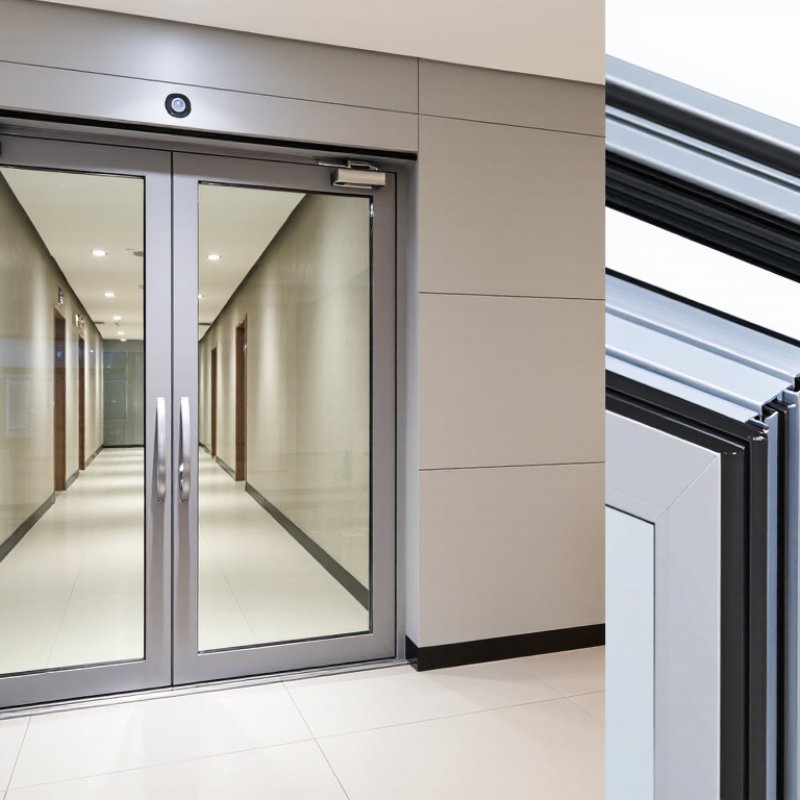
What makes a sliding door smoke proof? It is not only the glass or metal panel. A reliable smoke-control assembly limits leakage around the edges, meeting stiles, track, and floor. Compression seals must close continuous gaps when the door shuts. The frame also needs accurate installation. Small alignment errors can create visible smoke paths. No door is perfectly smoke-proof.
Professional testing matters. UL 1784 evaluates air leakage through door assemblies, while EN 1634-3 measures smoke leakage under controlled conditions. For Chinese projects, buyers should also check applicable GB standards and local fire design requirements. NFPA’s Fire Loss in the United States During 2023 reported 3,670 civilian fire deaths. This figure shows why smoke control deserves attention, not only fire resistance. However, one report cannot prove that every sliding door performs equally.
Tips: Ask for a complete test report, not a marketing claim. Check the tested door size, temperature, pressure, seal type, and installation method. Inspect the bottom gap with a feeler gauge. Confirm that the door closes fully without dragging. A practical mistake is choosing a thick panel while ignoring the frame and track. The whole assembly matters. Maintenance records should include seal replacement and closing-force checks. Some specifications remain unclear, and that uncertainty should be challenged before purchase.
How to Assess Smoke Control and Fire Safety Ratings
China Best Smoke Proof Sliding Doors How to Choose?
When assessing a smoke-proof sliding door, separate fire resistance from smoke control. A fire-rated door may resist flames for 60 or 90 minutes, yet still leak smoke around its edges. NFPA 105 points to UL 1784 testing for smoke door assemblies. The test measures air leakage under controlled pressure. A commonly referenced limit is 3.0 cubic feet per minute per square foot at 0.1 inches of water pressure. Check the adopted local edition. Requirements can differ.
Review the complete door assembly, not only the panel. Ask for the test report, pressure conditions, frame details, seals, glazing, and closing method. The National Fire Protection Association reported 1,388,500 U.S. fires in 2023. Smoke spreads quickly through corridors, lifts, and service openings. Sliding hardware must close reliably after daily use. A beautiful door is not enough. I would also inspect the threshold, because small gaps often become weak points.
Tips: Confirm the required fire rating with the authority having jurisdiction. Match the door, frame, seals, and hardware to one tested assembly. Check whether the certificate covers sliding operation. Request leakage results, not only a fire-rating label. Test the self-closing function during maintenance. Ratings can be misunderstood. Recheck assumptions before ordering.
China Best Smoke Proof Sliding Doors How to Choose? - How to Assess Smoke Control and Fire Safety Ratings
| Assessment Dimension | What to Check | Relevant Rating or Evidence | Practical Acceptance Guide | Common Warning Signs |
|---|---|---|---|---|
| Complete doorset certification | Confirm that the fire and smoke test applies to the complete assembly, including the door leaf, frame, seals, glazing, guides, hardware, operator and surrounding construction. | A valid test report or certification listing the exact doorset configuration and permitted variations. | Treat the doorset as one tested system. The rating of an individual panel must not be used as the rating of the installed door. | Only a material certificate or a generic product brochure is provided; the frame or operating system is excluded. |
| Fire resistance classification | Identify whether the project requires integrity only or both integrity and insulation. | Under EN 13501-2, E indicates integrity and I indicates insulation. Examples include E 30, EI₂ 30 and EI₂ 60, where the number represents minutes. | Select the required class from the building fire strategy and local code, not from a supplier’s highest advertised rating. | The quotation states “fireproof” or “120 minutes” without identifying the classification method, test standard or doorset scope. |
| Smoke leakage performance | Check leakage through the perimeter, meeting stile, bottom gap, frame joints and any vision panel or service opening. | EN 1634-3 is commonly used for smoke leakage testing. European classifications include Sa for ambient-temperature smoke and S200 for smoke at 200°C, subject to the applicable test and classification rules. | Use a smoke-rated assembly with tested seals and thresholds appropriate to the required temperature condition. | The product is described as “smoke proof” but no leakage test report, pressure range, temperature condition or leakage result is available. |
| Applicable Chinese requirements | Confirm which Chinese standards are specified by the project, authority having jurisdiction and fire consultant. | GB 12955 covers fire doors in China; GB/T 24573 is used for fire-door smoke-leakage test methods. Verify the current editions and project applicability before procurement. | Request Chinese-language test documentation where required and ensure the tested product matches the construction intended for the site. | A report references an obsolete, unrelated or incomplete standard, or the test sample differs materially from the proposed door. |
| International alternative standards | For projects outside China, match the test method to the governing code and approval route. | EN 1634-1 addresses fire resistance testing for door and shutter assemblies; UL 10C is a positive-pressure fire test method for door assemblies; NFPA 105 addresses smoke door assemblies and related installation requirements. | Do not convert ratings between standards without written acceptance from the authority, fire engineer or certification body. | A supplier presents an EN, UL or local rating as automatically equivalent to another jurisdiction’s requirement. |
| Sliding-door operating mode | Determine whether the door is manual, automatic, normally open, normally closed or held open by a fire-alarm-controlled device. | The test evidence should cover the operator, hold-open or release mechanism, closing sequence, power-loss behavior and any emergency breakout function. | On alarm or power failure, the door should perform the fire strategy’s required action and remain closed or close automatically as specified. | The fire rating is tested on a manually operated sample, but the proposed installation uses an untested automatic operator. |
| Perimeter seals and meeting stiles | Inspect intumescent materials, smoke seals, brush seals, astragals, overlapping meeting stiles and seal continuity at corners. | Seals should be identified in the approved doorset documentation and installed without gaps, damage, excessive compression or unauthorized substitution. | Use only the seal type, size and location covered by the test evidence. Check that sliding movement does not dislodge the seals. | Missing seals, field-cut seals without approval, visible light gaps or incompatible replacement components. |
| Frame, wall and head details | Verify the supporting wall type, frame material, fixing method, pocket or track enclosure and fire-stopping around the opening. | The supporting construction and installation details must fall within the certified or assessed scope of application. | Use approved fixing spacing, backing materials and fire-stopping products; record the installation details for inspection. | The door is tested in masonry but installed in a lightweight partition without supporting evidence or approved detail. |
| Glazing and vision panels | Check the glass type, pane thickness, glazing bead, setting blocks, fire-resistant sealant and maximum permitted panel dimensions. | Fire-resistant glazing must be tested as part of the doorset or covered by compatible evidence for the specified fire and smoke class. | Keep glazing sizes and framing exactly within the documented limits. | Ordinary laminated or tempered glass is substituted for tested fire-resistant glazing. |
| Air-pressure and smoke-control coordination | Review the building smoke-control design, pressure differentials, ventilation strategy, door undercuts and adjacent openings. | Smoke leakage results are linked to the test pressure and configuration; they are not a guarantee that the complete building will remain smoke-free. | Coordinate the doorset with mechanical, electrical and fire-alarm designs before final selection. | The door is selected in isolation, without checking pressurization forces, extraction airflow or the required escape-door operation. |
| Self-closing and fail-safe functions | Test normal closing, alarm release, power failure, obstruction detection, manual override and emergency egress operation. | The closing and release sequence should be documented in the fire strategy, control logic and commissioning records. | The door must close reliably without defeating required accessibility or escape provisions. | The door depends on mains power, has no tested release arrangement or remains open after an alarm. |
| Durability and cycle performance | Consider traffic frequency, door mass, opening speed, track wear, seal wear and the required maintenance interval. | Ask for documented cycle testing or a durability classification where required by the project specification. | Choose hardware and operators sized for actual traffic; maintain seals, guides, rollers and release devices. | No maintenance schedule, spare-parts plan or inspection procedure is provided for a high-traffic opening. |
| Installation and commissioning | Check installer competence, approved drawings, tolerances, fire-stopping, control wiring and final functional testing. | Require installation records, product traceability, commissioning results and handover documents. | Inspect the completed opening and test smoke seals, closing force, alarm release and power-failure operation before acceptance. | The supplier provides products but no approved installation method, site supervision or commissioning report. |
| Documentation package | Collect test reports, classification reports, drawings, installation instructions, declarations, maintenance instructions and component schedules. | Documents should identify the tested dimensions, wall type, hardware, seals, operator, rating, test laboratory and report validity or scope. | Accept only traceable evidence that matches the exact configuration, dimensions and intended application. | Unverifiable certificates, edited screenshots, missing report numbers or documents referring to a different product configuration. |
Which Materials and Sealing Features Matter Most?
Choosing smoke-proof sliding doors in China starts with the materials, not the appearance. A durable frame usually combines extruded aluminum with reinforced steel at high-load points. Aluminum resists corrosion, while steel helps prevent twisting during repeated operation. For the panel, laminated fire-rated glass offers better crack control than ordinary tempered glass. However, glass alone does not make a door smoke-resistant.
Sealing details matter more than many buyers expect. Look for continuous EPDM or silicone gaskets around the frame and meeting edges. These materials stay flexible through temperature changes and frequent cleaning. An interlocking center stile can reduce gaps when two sliding panels close. A bottom brush seal may block dust, but it is not always enough for smoke control. Better systems use an adjustable drop seal or a tested threshold arrangement. Small gaps become visible under pressure.
Check the complete door assembly, not only individual components. Ask for smoke-leakage test reports, installation instructions, and evidence that the selected hardware matches the tested configuration. Local building requirements may differ by project type and location. Site installation also affects performance; an excellent seal can fail against an uneven floor. In practice, I would inspect corners, rollers, and closing speed after installation. This step is often overlooked. It should not be. Cheap materials may look acceptable at first, but their seals can harden, shrink, or detach within a few seasons.
How to Compare Chinese Sliding Door Manufacturers
China Best Smoke Proof Sliding Doors: How to Choose?
When comparing Chinese sliding door manufacturers, examine test evidence before comparing prices. Ask for smoke-control test reports, air-leakage data, fire ratings, and standards accepted in your project location. A reliable supplier should explain testing conditions clearly. Vague phrases like “best protection” are not enough.
Tips: Request a working sample. Check the door’s closing speed, brush seals, magnetic strips, rollers, and frame joints. Slide it several times. Listen for scraping. Measure gaps with a thin card. Also inspect how the manufacturer handles drawings, revisions, packaging, and replacement parts. These details reveal practical experience. A polished showroom can still hide weak production control.
Compare factories through more than online photographs. Ask about material thickness, glass specifications, hardware sources, quality inspections, and production capacity. Request recent project references with similar door sizes and smoke-control requirements. A video inspection may help, but an independent factory audit is stronger. Confirm warranty terms, installation guidance, lead times, and export documents in writing. I would also compare two samples under the same conditions. Small differences matter. Some suppliers may promise customization too quickly, while unusual sizes can affect safety and durability. That is worth questioning before payment.
What Installation and Maintenance Standards Should You Check?
Choosing smoke-proof sliding doors starts with verified installation standards, not attractive hardware. NFPA’s recent U.S. fire-loss report recorded more than 3,000 civilian fire deaths and over 14,000 injuries in one year. Smoke control deserves careful checking.
Ask for a complete, tested door assembly. The door, frame, seals, rollers, guide track, and wall connection should match the tested configuration. NFPA 105 covers smoke door assemblies, while UL 1784 measures air leakage. In Europe, EN 1634-3 testing supports smoke-control classifications such as Sa and S200. Check the test certificate, leakage class, temperature range, and approved maximum size. A “smoke-proof” label alone proves little.
Installation errors often happen around the floor and frame. Inspect continuous perimeter seals, automatic closing, track alignment, and clearances with a feeler gauge. Do not cut seals for cables or add untested locks. The installer should record serial details, test results, and any field adjustment. NFPA guidance also supports documented periodic inspection, commonly at least annually for fire door assemblies. Clean the track, test closing force, and replace damaged seals promptly. Real sites are messy. Dust, uneven floors, and rushed handovers can defeat a compliant design. That uncomfortable detail deserves more attention.
Related Posts
-
Unlocking Opportunities in Global Trade with Commercial Sliding Doors at the 137th Canton Fair
-

Navigating Tariff Challenges: How Custom Sliding Doors from China Thrive Amidst US-China Trade Tensions
-

7 Tips for Choosing the Best Soundproof Sliding Doors for Your Home
-
Common Issues Faced with Best Commercial Sliding Doors and How to Solve Them
-
How to Choose the Right Commercial Sliding Doors for Your Business Needs
-

Best Custom Sliding Doors for Your Home Design Needs?