How to Choose the Best Ultra Wideband RTLS in 2026?
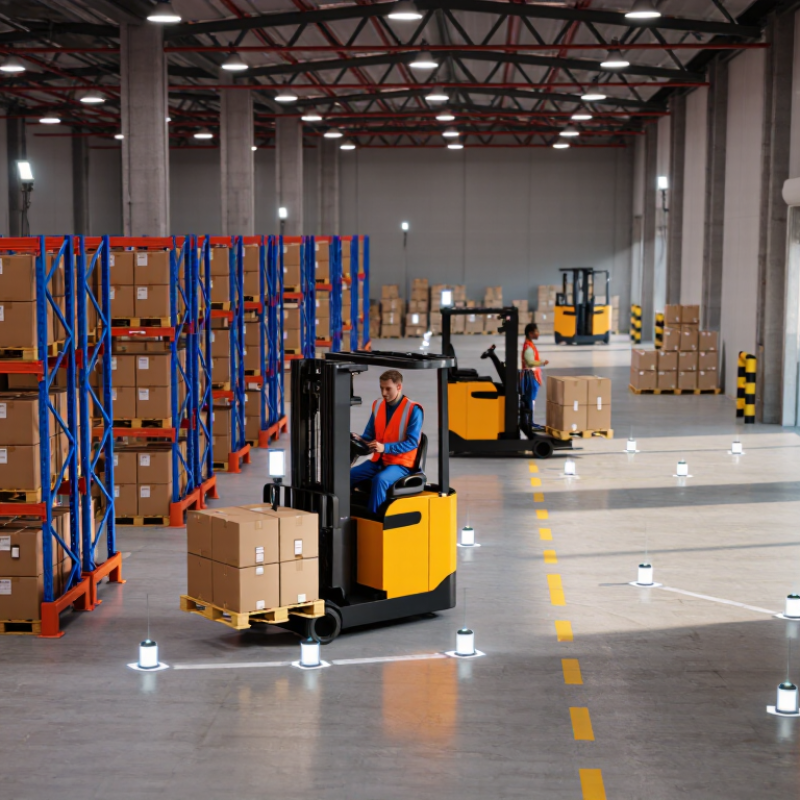
Choosing the best Ultra Wideband Rtls platform in 2026 requires more than comparing accuracy claims. It requires testing how the system behaves in real buildings, under real operational pressure. A warehouse may contain metal racks, moving forklifts, concrete walls, and thousands of tags. These details can change performance significantly.
Industry forecasts explain the growing interest. MarketsandMarkets valued the real-time location systems market at approximately USD 5.6 billion in 2023 and projected it to reach USD 10.3 billion by 2028. Grand View Research also reports strong growth in the ultra-wideband market, supported by demand for precise indoor positioning. However, market growth does not guarantee a suitable deployment. A system promising 10-centimeter accuracy may perform differently near machinery, reflective surfaces, or crowded loading bays.
Andrew Zignani, Research Director at ABI Research, described UWB as “a highly accurate and secure technology for location and ranging.” That capability matters when a site needs reliable forklift tracking, worker safety alerts, asset utilization data, or centimeter-level navigation. Yet accuracy is only one part of the decision. Buyers should examine battery life, anchor installation, calibration effort, API quality, cybersecurity, scalability, and total ownership cost.
The demonstration may look perfect. Reality is less tidy.
A strong evaluation should include a pilot across difficult zones, not only an open test area. Measure latency beside steel shelving. Check tag performance after several weeks. Review missed events, not just successful ones. We may overvalue precision and undervalue maintenance. The best Ultra Wideband Rtls solution is therefore the one that delivers dependable operational value, not merely the most impressive number on a specification sheet.
Define Ultra Wideband RTLS and Its Core Positioning Principles
Ultra Wideband Real-Time Location Systems (UWB RTLS) locate assets and people using extremely short radio pulses. They calculate distance from signal travel time, rather than relying mainly on signal strength. IEEE 802.15.4z supports stronger ranging security and precision. In open indoor spaces, well-designed systems can achieve accuracy near 10–30 centimeters. That figure is not guaranteed.
MarketsandMarkets’ 2024 report estimates the RTLS market will grow from approximately USD 5.7 billion in 2023 to USD 10.3 billion by 2028. This growth reflects demand for safer workflows, faster asset searches, and better space utilization.
The core positioning principle is geometry. Fixed anchors measure a tag’s distance through time-of-flight or two-way ranging. The system then calculates the tag’s position from several measurements. More anchors do not automatically mean better results. Poor placement creates weak geometry, especially near metal racks, walls, and moving machinery.
Practical testing matters. A warehouse map may look accurate on a screen, yet fail beside a steel cabinet. Non-line-of-sight signals can produce sudden location jumps. Calibration, anchor height, synchronization, and filtering deserve equal attention. NIST research on indoor positioning repeatedly highlights multipath and obstruction as major accuracy challenges. That warning should shape procurement decisions. A short pilot, using real routes and real obstructions, is more trustworthy than a polished demonstration. We often overestimate laboratory accuracy.
The building decides the truth.
Identify the Operational Requirements Your RTLS Must Support
Choosing an ultra wideband RTLS should begin with operational requirements, not location accuracy alone. Define the decisions the system must support on a busy shift. Do supervisors need sub-meter positioning, zone-level visibility, or movement history? Specify latency, update frequency, asset volume, and environmental conditions. A metal-heavy production floor may expose weaknesses that a clean demonstration never shows.
The 2024 RTLS market report by MarketsandMarkets projects growth from about $5.9 billion in 2024 to $10.3 billion by 2029. That expansion reflects practical demand for safer workflows, faster searches, and stronger process control. Yet adoption can disappoint when teams measure tags instead of outcomes. Test whether location data reduces search time, prevents unauthorized movement, or improves equipment utilization. Also check integration with workforce systems, maintenance tools, alarms, and existing network infrastructure. According to the 2024 Global Smart Manufacturing Survey, 92% of manufacturers viewed smart manufacturing as a competitiveness driver. Still, connectivity alone does not create operational value.
Tips: Write three measurable use cases before requesting proposals. Record real aisle widths, ceiling heights, tag density, and interference sources. Run a live pilot during peak activity. Ask operators what the map misses. Their answers may be uncomfortable, but they often reveal the real requirement. Include battery replacement, calibration, cybersecurity, and data retention in the operating cost. A perfect pilot can still fail at scale.
| Operational Requirement | Typical Planning Target | Why It Matters | UWB RTLS Capability to Assess | Recommended Validation Method | Priority |
|---|---|---|---|---|---|
| Location Accuracy | Approximately 10–30 cm in controlled indoor areas | Supports precise asset positioning, work-in-progress tracking, tool control and worker-location workflows. | Two-way ranging performance, anchor geometry, line-of-sight limitations and accuracy under real operating conditions. | Test fixed reference points and moving tags in representative zones, including areas with metal equipment and obstructions. | High |
| Update Rate and Location Latency | 1–10 location updates per second; latency suitable for the workflow | Fast updates are important for collision prevention, process monitoring, dynamic routing and event detection. | Configurable update frequency, end-to-end latency, tag density and the effect of higher update rates on battery life. | Measure the time between physical movement and the corresponding event or position update in the application. | High |
| Coverage and Site Layout | Complete coverage of all required indoor zones, with planned handoff between areas | Gaps can interrupt tracking, create false alerts and reduce confidence in operational data. | Anchor spacing, coverage planning, multi-floor support, outdoor transition and performance around walls, racks and machinery. | Complete a radio survey and perform a walk test along normal routes, loading areas, storage aisles and restricted zones. | High |
| Scalability and Tag Density | Support the current population plus expected growth without unacceptable degradation | Tracking requirements often expand from a pilot area to multiple departments, buildings or sites. | Maximum concurrent tags, anchor capacity, location-message handling, multi-site architecture and performance under peak load. | Run a staged load test using the expected number of active tags and realistic update intervals. | High |
| Tag Battery Life | Several months to multiple years, depending on update rate and tag features | Frequent battery replacement increases labor, downtime and the risk of untracked assets. | Battery capacity, configurable transmission interval, motion-triggered operation, rechargeable options and low-battery reporting. | Compare measured battery consumption under the intended update profile, temperature range and usage pattern. | High |
| Environmental Durability | Protection and operating range appropriate for dust, moisture, impact, vibration and temperature | Industrial, healthcare and outdoor environments can expose tags and anchors to conditions that shorten service life. | Ingress protection rating, impact resistance, operating temperature, mounting options and suitability for cleaning processes. | Review test certificates and conduct a site trial in the most demanding environmental conditions. | High |
| Real-Time Alerts and Geofencing | Configurable zone, proximity, dwell-time and movement alerts | Alerts can support safety controls, unauthorized movement detection, process compliance and asset protection. | Geofence precision, alert latency, configurable rules, escalation workflows and filtering of nuisance events. | Test entry, exit, dwell and proximity scenarios using normal movement paths and boundary conditions. | High |
| Integration with Operational Systems | Reliable connection to existing WMS, MES, EAM, ERP, safety or dashboard systems | Location data creates measurable value only when it is linked to operational decisions and records. | REST APIs, webhooks, message protocols, software development kits, data export, event timestamps and integration documentation. | Build one complete workflow from tag event to business-system action and verify error handling and data reconciliation. | High |
| Security and Data Governance | Role-based access, encrypted communications, auditability and defined data-retention controls | Location data may reveal sensitive production processes, personnel movements or restricted-area activity. | Identity management, encryption in transit and at rest, key management, audit logs, network segmentation and privacy controls. | Review the security architecture, conduct access-control testing and document data ownership, retention and deletion procedures. | High |
| Deployment and Commissioning Effort | Repeatable installation, calibration and configuration process with limited operational disruption | Installation complexity affects project cost, rollout speed and the consistency of results across sites. | Anchor mounting flexibility, survey tools, automatic calibration, network requirements, configuration management and diagnostics. | Estimate installation hours per zone and document the steps required to add, move or replace infrastructure. | Medium |
| Interference and Coexistence | Stable performance alongside Wi-Fi, Bluetooth, cellular, industrial radios and other electronic equipment | RF congestion, reflective surfaces and machinery can affect reliability in complex facilities. | UWB channel options, spectrum compliance, interference tolerance, diagnostics and performance in high-reflection environments. | Test during normal production activity and compare results across different radio channels and operating conditions. | Medium |
| Device and Asset Identification | Unique, tamper-resistant identity for every tag and tracked object | Accurate association between a physical object and its digital record is essential for trustworthy workflows. | Unique identifiers, barcode or NFC pairing, tamper detection, tag reassignment and asset-lifecycle records. | Test tag provisioning, replacement, reassignment and decommissioning without creating duplicate or orphaned records. | High |
| Analytics and Historical Data | Searchable history with timestamps, zones, dwell time, movement paths and exception events | Historical location data enables bottleneck analysis, utilization measurement and continuous improvement. | Data granularity, retention capacity, export options, reporting tools, time synchronization and data-quality indicators. | Reconstruct a known movement sequence and verify that reports match the recorded operational events. | Medium |
| Availability and Resilience | Operational continuity during temporary network, power or service interruptions | Loss of location visibility can affect safety, production control and asset accountability. | Local buffering, store-and-forward behavior, redundant infrastructure, backup power options, monitoring and recovery procedures. | Simulate network and power interruptions, then verify data preservation, recovery time and alert behavior. | High |
| Total Cost of Ownership | Evaluate five-year infrastructure, tags, software, installation, support, batteries and maintenance costs | The lowest initial purchase price may not provide the lowest lifecycle cost. | Licensing model, hardware replacement cycle, battery servicing, support terms, upgrades, training and expansion costs. | Build a five-year cost model using the expected number of sites, anchors, tags, users and operating hours. | High |
Compare Accuracy, Coverage, Scalability, and System Reliability
How to Choose the Best Ultra Wideband RTLS in 2026?
Accuracy should be tested on your actual site, not in a showroom. Industry testing often reports 10–30 centimeter accuracy in controlled UWB environments. Walls, metal racks, body blocking, and antenna placement can increase errors. NIST research also shows that indoor positioning performance changes sharply with layout and signal conditions. That difference matters. Coverage is not simply the distance between anchors. A 2024 industry report from Grand View Research estimates continued double-digit growth for the RTLS market, but growth does not guarantee dependable deployment. Compare location error, update speed, and dead zones on a floor plan.
Tips: Run a pilot during normal operations. Track accuracy beside loading doors, elevators, and crowded aisles. Record missed updates, battery life, and installation time. Test moving assets, too.
Scalability requires more than adding tags. Check whether the system supports thousands of devices without slower updates or crowded wireless traffic. Review anchor density, API limits, historical data storage, and integration effort. Reliability deserves equal attention. Ask for uptime evidence, recovery procedures, timestamp consistency, and calibration records. IEEE 802.15.4z-based ranging can improve precision, yet real sites remain imperfect. I would distrust any promise of constant centimeter accuracy. A stronger evaluation compares the 95th-percentile error, not only the best result. That figure reveals what workers and assets will actually experience.
Evaluate Infrastructure, Integration, Security, and Total Cost
Choosing a UWB RTLS in 2026 starts with infrastructure, not a glossy location dashboard. Measure anchor spacing, ceiling height, metal racks, forklift traffic, and radio interference on the actual floor. A pilot should test dead zones during peak operations, not only in an empty warehouse. Require documented accuracy by zone, update rate, battery life, and calibration effort. A perfect coverage map is unrealistic.
Integration deserves equal scrutiny. The platform should provide documented APIs and support systems such as WMS, MES, REST, MQTT, or OPC UA. Test identity mapping, timestamp consistency, alert delivery, and offline recovery. Security cannot be an afterthought. The 2024 Data Breach Investigations Report found human involvement in 68% of breaches. Require multifactor authentication, role-based access, device certificates, encryption, network segmentation, audit logs, and clear retention policies. Even a location tag can expose sensitive movement patterns.
Calculate five-year total cost, including tags, anchors, gateways, licenses, cloud storage, site surveys, firmware updates, battery replacements, support, and downtime. The 2024 Cost of a Data Breach Report placed the average global breach cost at 4.88 million dollars. That is not UWB-specific, but it makes weak security financially material. Cheaper hardware may require more anchors or manual calibration. That tradeoff is easy to miss. Ask for measured results from similar buildings, not marketing averages. Some estimates will be wrong; revisit them after the pilot.
Select and Validate the Best UWB RTLS for Your 2026 Use Case
Selecting a UWB RTLS for 2026 should begin with a measurable workflow, not a feature list. Define the required accuracy, update rate, coverage, battery life, and integration points. Grand View Research estimates that the global RTLS market could reach USD 14.8 billion by 2030, with a 15.4% compound annual growth rate from 2024 to 2030. Deloitte and the MAPI Foundation reported in 2024 that 86% of manufacturers view smart manufacturing as a major competitiveness driver. These figures suggest strong demand, but demand does not prove operational value.
Validate the system in the real environment. Place anchors near metal racks, loading doors, machinery, and reflective surfaces. Test forklifts, workers, pallets, and empty zones during normal shifts. Record 95th-percentile location error, update latency, tag dropouts, and battery consumption. Check whether the platform exports usable data through documented APIs. Review access controls, retention rules, and incident procedures against recognized cybersecurity guidance. A clean test floor can mislead. I would also test seasonal changes, because inventory levels and vehicle traffic can alter radio performance. The first pilot may pass technically yet fail financially. Recalculate installation labor, calibration time, replacement tags, and training costs. MarketsandMarkets’ 2024 RTLS analysis identifies healthcare, manufacturing, and logistics as key application areas, but each requires different success thresholds. Accuracy alone is not enough.