7 Best AOC Fiber Cables for Global Buyers?
Global data traffic keeps rising, making dependable connectivity a purchasing priority. Cisco’s Annual Internet Report projected 5.3 billion internet users by 2023. It also forecast nearly 29.3 billion connected devices and connections worldwide. These figures show why network operators need faster, simpler, and more scalable cabling.
LightCounting’s optical transceiver research highlights continuing demand for higher-speed data-center connections. Dell’Oro Group’s Optical Transport market studies also identify capacity growth as a major industry driver. These reports support a practical conclusion. Cable selection now affects performance, installation time, power use, and long-term maintenance.
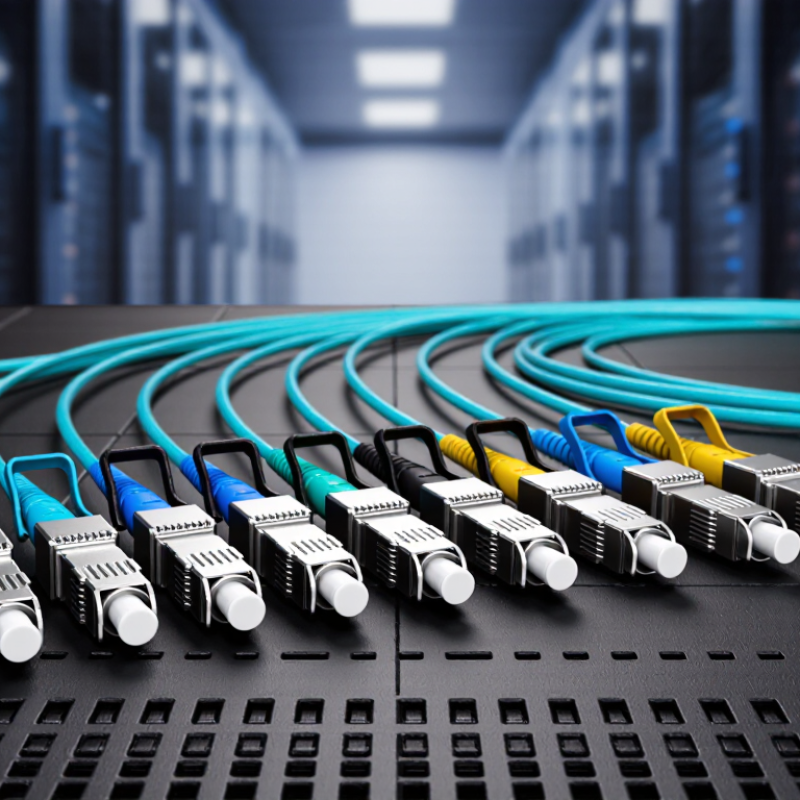
An Aoc Fiber Cable combines optical transmission with active electronics inside one assembly. It can reduce connector complexity and simplify short, high-bandwidth links. However, AOC is not automatically the best choice. Distance, switch compatibility, bend conditions, heat, and replacement access still matter.
Dr. Peter Winzer, a recognized optical-communications researcher, has stated, “Optical communications is the only technology that can satisfy the ever-growing demand for bandwidth.” His observation explains the wider market direction, but it does not remove the need for careful product testing.
This guide examines seven AOC Fiber Cable options for global buyers. Each selection considers speed, reach, connector type, interoperability, operating temperature, and supplier support. We will also examine application fit, because a data-center cable may not suit industrial equipment.
No ranking is permanently correct. That is the uncomfortable part. Specifications can look excellent while field performance disappoints. Buyers should verify firmware support, optical compliance, warranty terms, and real installation feedback. The strongest choice is not always the cheapest. It is the cable that remains stable after deployment.
AOC Fundamentals: How Electrical-to-Optical Conversion Supports High-Speed Links
Active optical cables (AOCs) combine fiber strands with compact electronic modules inside their connectors. This design converts electrical data into optical signals for transmission. At the receiving end, another module changes light back into electrical data. The cable itself performs the conversion.
A transmitter usually uses a laser or VCSEL to encode high-speed data as light pulses. The fiber carries these pulses with low electrical loss and limited electromagnetic interference. A photodetector then receives the signal and restores it for the host equipment. This process supports stable links in servers, storage systems, and data centers.
In practical deployments, cable length and connector compatibility deserve close attention. A longer cable may offer flexibility, but it can also increase installation difficulty. Check the required data rate, interface type, bend radius, and operating temperature. I have seen buyers focus on bandwidth while overlooking airflow around active connectors. That mistake can create avoidable reliability problems. AOC modules also consume more power than passive fiber assemblies. Usually, the difference is small. Still, dense installations can make it noticeable. Testing should include link stability, error rates, and repeated insertion. Optical conversion is efficient, but not flawless. Poor routing, heat, or incompatible firmware can still interrupt a high-speed link.
Seven AOC Speed Classes: 10G, 25G, 40G, 100G, 200G, 400G, and 800G
Choosing the best AOC fiber cable starts with the required speed class, not the advertised maximum. In data-center deployments, 10G remains practical for storage links, monitoring, and older switch ports. 25G offers a useful upgrade for server connections without costly infrastructure changes. 40G can serve established aggregation systems. 100G suits modern spine-and-leaf networks. 200G and 400G support dense AI, cloud, and high-throughput clusters. 800G targets demanding backbone and accelerator links. Fast is not always better. Power draw, port compatibility, cable length, and airflow still matter.
AOC cables combine transceivers and optical fiber in one factory-terminated assembly. This reduces field polishing and simplifies installation. I check connector type, lane structure, bend radius, and switch compatibility before purchasing. A 400G cable may use different breakout options than a 100G cable. That detail affects rack planning. Always verify the device’s supported speed and firmware behavior. Measure the actual route, including vertical slack. A short cable can pull against a cage. I have made that mistake.
Tips: Use 10G and 25G for targeted upgrades. Reserve 100G to 400G for scalable server fabrics. Consider 800G only when switches, optics, and cooling are ready. Request test reports for insertion loss, link stability, and temperature performance. Label both ends before installation. It saves time later. For very short links, compare passive copper options too; optical is not automatically the best answer.
7 Best AOC Fiber Cable Speed Classes for Global Buyers
Nominal aggregate data rates: 10G, 25G, 40G, 100G, 200G, 400G, and 800G
This chart compares the standardized nominal bandwidth classes commonly used for active optical cables in data-center and high-performance networking environments. Higher-speed classes can support greater traffic density, but the final choice should also consider connector type, transmission distance, port compatibility, power consumption, and network upgrade plans.
Reach and Fiber Selection: Compare AOC Links with IEEE 802.3 Specifications
For global buyers, the seven strongest AOC choices match speed, reach, and IEEE 802.3 requirements. A 10G SFP+ cable suits short server links under 10 meters. A longer 10G option can serve wider racks, but verify its rated distance. A 25G SFP28 cable supports modern top-of-rack connections under IEEE 802.3by. For higher density, consider 40G QSFP+, 100G QSFP28, 200G QSFP56, and 400G QSFP-DD cables. Their standards commonly align with IEEE 802.3ba, 802.3bm, or 802.3bs specifications.
Reach is not just a number on the package. Cable construction, transceiver coding, connector cleanliness, and switch compatibility all affect stability. I have seen a link pass a short test, then show errors after installation in a warm cabinet. That result was easy to overlook. Select cables with documented maximum reach, wavelength details, operating temperature, and tested device compatibility. Do not assume every cable with the same connector will negotiate correctly.
Tips: Leave modest length for routing, but avoid unnecessary slack. Confirm the host port standard before ordering. Test both ends with an error counter, not only a link light. If the required distance sits near the cable limit, choose a higher-rated option. A cheaper cable may work, but its limitations should be recorded clearly.
Global Purchasing Checklist: Verify RoHS Compliance, Temperature Range, and Warranty
7 Best AOC Fiber Cables for Global Buyers?
Choosing among seven AOC fiber cables requires more than checking speed and connector type. Global buyers should treat compliance, temperature, and warranty as purchasing evidence. The European Commission’s RoHS framework restricts ten hazardous substances in electrical products. Request a current declaration, test report, and material statement for each cable. A logo alone is not enough.
Temperature ratings also need careful review. Confirm both operating and storage ranges, especially for server rooms near loading areas. Many products specify operation from 0°C to 70°C, but this range is not universal. Ask whether performance was tested at maximum length and bandwidth. Fiber attenuation can change with heat. Small details matter.
Warranty terms should match your deployment risk. Uptime Institute’s 2024 Global Data Center Survey reported that power problems caused about 54% of significant outages. A failed cable can still increase recovery time. Request replacement timing, coverage limits, testing procedures, and support contacts. Check whether the warranty covers connectors, optical performance, and transit damage. I would not trust a certificate alone. That shortcut fails. Keep the documents with the purchase record, and verify serial numbers during receiving inspection.