2026 Best Oil Storage Fuel Drum for Global Buyers
Choosing the 2026 Best Oil Storage Fuel Drum requires more than comparing price, capacity, or surface appearance. Global buyers need a container that performs reliably during transport, filling, storage, and daily handling. Steel and high-density polyethylene drums offer different strengths. Steel resists impact and heat. Plastic can reduce corrosion risks with compatible fuels. The right decision depends on fuel type, storage conditions, closure design, and service frequency.
Safety scholar James Reason wrote, “We cannot change the human condition, but we can change the conditions under which humans work.” This principle matters when selecting an Oil Storage Fuel Drum. A secure bung, visible level markings, stable base, and practical lifting points reduce avoidable mistakes. Buyers should also check material compatibility, leak resistance, grounding provisions, and supplier quality records. Relevant transport and workplace requirements must be verified for each destination.
Small details matter.
A drum may look strong, yet its gasket can fail under heat. A perfect coating cannot correct poor warehouse ventilation. This is where purchasing decisions become less comfortable. The lowest quotation may hide weak closures, inconsistent wall thickness, or limited after-sales support. Reliable suppliers should provide test evidence, traceable production information, clear handling instructions, and realistic service limits. This guide compares practical drum choices for farms, workshops, emergency reserves, and industrial facilities. It also recognizes an uncomfortable truth: no container removes every risk. Good storage depends on equipment, inspection, training, and disciplined handling.
What Is an Oil Storage Fuel Drum and How Does It Work?
2026 Best Oil Storage Fuel Drum for Global Buyers
What Is an Oil Storage Fuel Drum and How Does It Work?
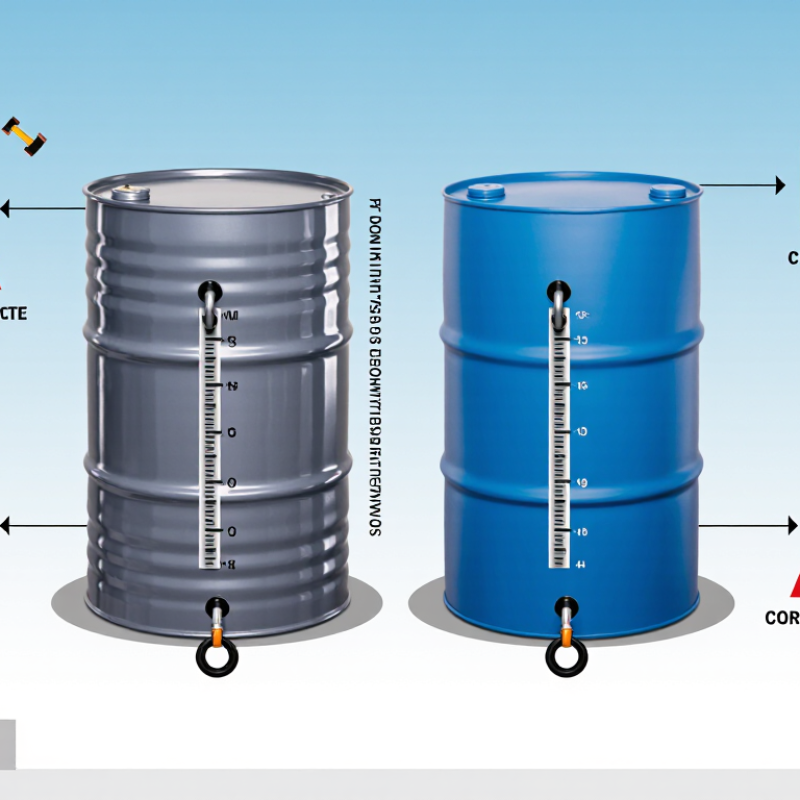
An oil storage fuel drum is a sealed container for holding petroleum-based liquids during storage or transport. Most drums use treated steel or compatible high-density plastic. Their cylindrical shape distributes pressure evenly and supports efficient handling. A typical drum has a reinforced body, two openings, a gasket, and threaded closures. The larger opening supports filling, while the smaller opening allows controlled dispensing or ventilation when designed for that purpose.
The drum works by limiting contact between fuel, air, moisture, and contaminants. Its internal lining can reduce corrosion and protect stored oil from material reactions. Tight closures help prevent leakage, while approved vents manage pressure changes caused by heat or cold. A drum should remain upright on a stable surface. Secondary containment adds protection if damage occurs. Never rely on appearance alone.
During inspection, check the seams, closure threads, gasket condition, labels, and base ring. A dent may look minor but weaken handling safety. Rust around the opening deserves immediate attention. Keep drums away from ignition sources and extreme temperatures, following local storage requirements. Grounding may be necessary for certain flammable liquids. No drum is perfect. Even a well-made container can fail when it is overfilled, reused incorrectly, or exposed to harsh conditions. Practical maintenance matters as much as the material itself.
How to Compare Fuel Drum Materials, Sizes, and Designs
Choosing a fuel drum starts with the stored liquid, not the lowest quotation. Steel drums resist punctures, stacking pressure, and rough handling during warehouse movement. HDPE drums weigh less and resist many corrosive chemicals. However, sunlight, heat, and fuel additives can change plastic performance over time.
The UN Recommendations on the Transport of Dangerous Goods requires tested packaging for applicable hazardous liquids. Check the UN performance marking, closure design, gasket material, and pressure rating. A 200-liter drum suits regular bulk handling, while smaller 20- to 60-liter sizes reduce lifting risks. Bigger is not always better. A full 200-liter drum can exceed 200 kilograms.
Design details often decide practical safety. Look for bung protection, rolling rings, internal coatings, and tamper-evident closures. The U.S. EPA’s SPCC guidance emphasizes secondary containment and spill control around oil storage. A tray should hold the largest container and account for rain where exposure exists. Site rules may demand more.
The IEA Oil 2024 report projects global oil demand rising from about 102.9 million barrels daily in 2024 to 105.4 million by 2030. That growth keeps durable storage relevant, but it does not justify one universal drum. My earlier comparisons focused too much on material price. Field inspections showed that weak closures and poor labeling created greater problems. Consider temperature, transport distance, stacking frequency, and disposal routes before approving a design.
| Drum Type | Typical Material | Common Nominal Capacity | Typical Dimensions | Suitable Fuels and Oils | Key Advantages | Important Limitations | Best-Fit Applications | Selection Guidance |
|---|---|---|---|---|---|---|---|---|
| Open-Head Steel Drum | Carbon steel body with removable lid and gasket | 20 L, 30 L, 60 L, 114 L, 208 L, and 210 L | For a 208 L drum: approximately 585 mm diameter × 880 mm height; dimensions vary by manufacturer | Diesel, kerosene, heating oil, lubricating oil, and many non-corrosive petroleum products | Wide opening for filling, cleaning, and solid or viscous products; strong stacking performance when designed for stacking | Can corrode when exposed to water, salt, or damaged coatings; heavier than plastic; not suitable for every corrosive liquid | Industrial oil distribution, maintenance workshops, agricultural fuel handling, and products requiring easy access | Choose an interior lining and gasket that are chemically compatible with the exact fuel or oil. Confirm the drum’s UN performance rating when regulated transport is required. |
| Closed-Head Steel Drum | Carbon steel body with permanently formed top and two threaded openings | 20 L, 60 L, 114 L, 208 L, and 210 L | For a 208 L drum: approximately 585 mm diameter × 880 mm height; bung configuration affects top clearance | Diesel, kerosene, heating oil, hydraulic oil, engine oil, and other compatible liquid petroleum products | Reduced spill exposure, good mechanical strength, efficient handling with drum equipment, and common global availability | Small bung openings make cleaning more difficult; corrosion protection is needed in wet or coastal environments | Bulk liquid fuel storage, export shipments, warehouses, service stations, and industrial oil supply | Use a compatible bung seal, vented cap where appropriate, and an external coating suitable for the storage environment. |
| High-Density Polyethylene (HDPE) Drum | UV-stabilized high-density polyethylene, often with plastic or metal closures | 20 L, 25 L, 30 L, 60 L, 120 L, and 220 L | For a 220 L drum: commonly about 580–600 mm diameter × 900–980 mm height; design varies considerably | Diesel and selected lubricants; fuel compatibility must be verified with the resin, additives, temperature, and storage duration | Does not rust, is lighter than steel, and can offer good resistance to moisture and many chemicals | Gasoline and certain additives may permeate or degrade some plastics; prolonged sunlight and high temperature can reduce service life | Outdoor or humid environments, agricultural operations, water-sensitive locations, and applications needing low handling weight | Request a chemical-compatibility statement and confirm whether the drum is approved for the intended fuel and transport mode. |
| UN-Rated Steel Fuel Drum | Steel drum tested and marked under applicable UN packaging requirements | Commonly 60 L, 114 L, 208 L, and 210 L | Dimensions depend on capacity, head style, closure system, and test configuration | Regulated flammable or combustible liquids when the specific drum rating matches the product | Provides documented performance testing for packaging strength, leakage, stacking, and pressure where applicable | A UN mark alone does not prove compatibility with every fuel; certification, closure instructions, and filling limits must be followed | International and domestic transport of regulated petroleum products | Check the complete UN marking, packing group, maximum permitted capacity, closure instructions, and destination-country transport rules. |
| UN-Rated HDPE Fuel Drum | High-density polyethylene manufactured and tested for the stated UN packaging specification | Commonly 20 L, 30 L, 60 L, 120 L, and 220 L | Capacity and wall construction determine the final dimensions; molded handles and ribs may increase overall width | Selected fuels and petroleum products only when the chemical compatibility and UN specification both apply | Lower tare weight than steel and resistance to external rust; useful where manual handling is frequent | Permeation, UV exposure, temperature, and fuel additives require careful evaluation; not all plastic drums are suitable for flammable liquids | Approved transport and storage applications where weight reduction and corrosion resistance are priorities | Verify the exact UN rating, plastic resin type, service temperature, fuel formulation, and maximum storage period. |
| Lever-Lock Salvage Drum | Heavy-gauge steel or HDPE body with removable cover and lever-lock ring | Typically 60 L, 114 L, 208 L, and 210 L | Usually similar to the corresponding nominal drum capacity, with additional lid and ring clearance | Compatible packaged fuels, oily materials, contaminated absorbents, or damaged containers; not automatically suitable as a primary fuel package | Large opening, secure removable cover, and useful containment capacity for emergency handling | A salvage drum is generally a containment solution, not a substitute for a correctly rated primary fuel container | Emergency response, damaged-package containment, spill control, and temporary overpacking | Use only according to applicable dangerous-goods rules and the salvage drum’s stated capacity and performance limits. |
| Small Portable Fuel Canister | Approved steel or HDPE construction with screw cap, spout, or integrated closure | 5 L, 10 L, 20 L, and 25 L | Compact rectangular or jerry-can style; exact dimensions depend on handle and spout design | Portable quantities of gasoline, diesel, kerosene, or other fuels only when the container is specifically approved for that fuel | Easy manual carrying, controlled dispensing, and convenient use for maintenance or emergency reserves | Lower capacity than industrial drums; greater exposure to handling damage and accidental tipping; storage regulations still apply | Small equipment, field maintenance, generators, agricultural machinery, and emergency fuel supply | Prioritize a secure cap, flame-arresting or approved closure where required, stable base, and clear fuel identification. |
| Reconditioned Steel Drum | Previously used steel drum that has been inspected, cleaned, tested, and reconditioned | Commonly 60 L, 114 L, 208 L, and 210 L | Usually follows the original drum’s nominal dimensions, but dents and coating condition may affect usability | Only the fuel or oil types permitted by the reconditioner and the drum’s current lining and closure condition | Potentially lower purchase cost and reduced material demand compared with new packaging | Previous contents, residual contamination, corrosion, and weakened seams must be investigated before reuse | Non-critical industrial storage, compatible oil products, and applications with documented inspection procedures | Require cleaning records, inspection results, closure replacement, compatibility confirmation, and current transport approval where applicable. |
| Comparison Dimension | What to Check | Practical Buying Benchmark |
|---|---|---|
| Fuel Compatibility | Fuel type, additives, aromatic content, biofuel blend, viscosity, temperature, and intended storage period | Obtain written compatibility confirmation for the exact drum material, liner, gasket, and closure. |
| Capacity | Nominal volume, usable fill volume, expansion space, and local legal fill limits | Do not fill to the nominal brim. Follow the supplier’s filling instructions and applicable transport requirements. |
| Material Protection | Steel coating or lining, HDPE UV stabilization, corrosion resistance, and resistance to impact | Select coated or lined steel for corrosion-sensitive environments and UV-stabilized HDPE for outdoor use when compatible. |
| Closure and Seal | Bung size, gasket material, venting, tamper evidence, leak resistance, and replacement availability | Use closures supplied or approved for the drum and the stored fuel; replace damaged gaskets before filling. |
| Transport Approval | UN specification, packing group, performance level, marking, closure instructions, and destination-country rules | For regulated international shipment, match the complete packaging specification to the fuel’s classification. |
| Handling and Storage | Forklift compatibility, pallet footprint, stackability, rolling rings, handles, and storage orientation | Confirm the loaded weight, lifting points, rack limits, and whether the drum is approved for stacking. |
| Environmental Conditions | Sunlight, rain, salt spray, temperature range, indoor ventilation, and spill-containment requirements | Store on a stable surface with secondary containment where required, away from ignition sources and excessive heat. |
| Traceability | Production date, batch number, inspection records, material specification, and certification documents | Maintain records for every shipment, especially for regulated fuels and long-term storage programs. |
Which Safety Standards Govern Global Fuel Drum Storage?
Global fuel drum storage is governed by layered safety standards, not one universal rule. NFPA 30 addresses flammable and combustible liquids, including container design, separation distances, ventilation, spill control, and fire protection. In the United States, OSHA 29 CFR 1910.106 also covers storage rooms, handling areas, and ignition-source control. International buyers should check local fire codes and transport rules, including UN packaging requirements and ADR provisions for road movement.
The risk is measurable. NFPA’s Fire Loss in the United States During 2023 report recorded about 1.39 million fires and approximately 23.9 billion dollars in property damage. A compliant drum alone cannot prevent these losses. Storage areas need grounded equipment, clear access, secondary containment, and visible hazard labels. Safety data sheets should match the actual fuel and remain available near the storage point.
In practical inspections, I look for rust beneath the base, damaged bung threads, and oily concrete around racks. Small details matter. Ventilation is often underestimated. Local authorities may impose stricter spacing or capacity limits than international guidance. A drum certified for transport may still be unsuitable for long-term storage. That distinction is easy to miss, especially when purchasing across borders. Buyers should request test certificates, material specifications, closure instructions, and inspection records before approving a shipment. Mistakes happen. The standard must be verified at the installation site, not assumed from a catalog description.
How to Match a Fuel Drum to Oil Type and Storage Conditions
2026 Best Oil Storage Fuel Drum for Global Buyers
How to Match a Fuel Drum to Oil Type and Storage Conditions
Choosing a fuel drum starts with the oil, not the price. Diesel and kerosene commonly suit coated steel drums with tight, compatible closures. Hydraulic oil and engine oil may work with steel or certified high-density polyethylene containers. Always check the oil’s safety data sheet and the drum maker’s compatibility chart. Some additives can soften plastics or attack internal coatings. That detail is easy to miss.
Storage conditions matter just as much. In a hot outdoor yard, sunlight can raise internal pressure and damage plastic over time. A shaded, dry, ventilated store usually protects the contents better. Keep drums upright on a stable surface, away from drains and ignition sources. Use secondary containment where local rules require it. Leave expansion space. Never fill a drum completely.
Small details reveal practical quality. A clean bung, readable batch marking, and intact gasket reduce contamination risks. Rust around the seam is a warning, not decoration. For flammable oils, bonding, grounding, and approved handling equipment may be necessary under local safety codes. Ask a qualified specialist when storage volumes are significant.
A common mistake is treating every oil as identical. It is not. Even a strong drum can fail when heat, moisture, vibration, or incompatible seals are ignored. Recheck the choice after seasonal changes. Conditions rarely stay perfect.
How to Evaluate Suppliers, Costs, and Shipping in 2026
2026 Best Oil Storage Fuel Drum for Global Buyers
How to Evaluate Suppliers, Costs, and Shipping in 2026
A reliable supplier should provide material certificates, leak-test records, and clear production traceability. Ask for steel thickness, coating details, closure specifications, and sample inspection results. Factory experience matters, but evidence matters more. Request recent export references and audit photographs. A polished website proves little. Practical testing reveals more.
Compare total landed cost, not only the drum price. Include tooling, packaging, inland transport, customs charges, insurance, and port handling. Request quotations using identical quantities and delivery terms. A low offer may exclude essential documents or stronger pallets. That mistake becomes expensive later. No spreadsheet is perfect.
Shipping requires careful planning in 2026. Confirm drum dimensions, stacking limits, pallet design, and container utilization before ordering. Ask whether the shipment requires special declarations or handling procedures in the destination market. Check current carrier and local authority requirements. Rules can change. I would recheck them before every shipment, even with familiar suppliers. A small documentation error can delay a full container, while poor packing can leave dents, leaks, or unusable closures.
2026 Best Oil Storage Fuel Drum for Global Buyers
Common nominal steel drum capacities help buyers compare supplier offers, warehouse requirements, and ocean-shipping utilization. Actual usable volume, tare weight, UN certification, closure type, and dangerous-goods rules must be confirmed with the supplier.
Measurement note: Capacities are common nominal sizes. The 5-, 16-, 30-, and 55-US-gallon equivalents are converted using 1 US gallon = 3.78541 litres. Nominal capacity is not the same as recommended filling volume.